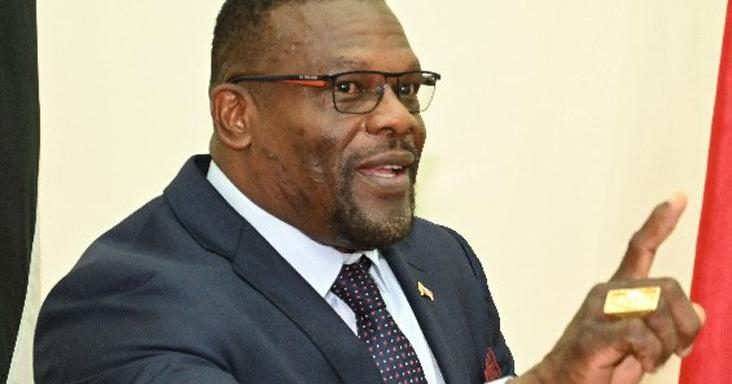
Trinidad and Tobago’s Homeland Security Minister Roger Alexander has issued a scathing condemnation of former Prime Minister Dr. Keith Rowley, characterizing his recent statements on law enforcement protocols as “irresponsible and reckless.” The political confrontation emerged after Rowley suggested that legal advice obtained by the Attorney General could encourage security forces to employ lethal measures based solely on suspicion.
At a Tuesday news conference, Rowley referenced a King’s Counsel opinion regarding the legality of US kinetic strikes against drug trafficking vessels in international waters. The former prime minister extrapolated this maritime precedent to suggest it created an “inducement” for Trinidadian law enforcement to apply similar lethal force standards on land. “If it is okay to kill people on the ocean on suspicion,” Rowley questioned, “isn’t it easier to kill people on land on the same suspicion?”
Minister Alexander provided the Trinidad and Tobago Police Service’s explicit clarification to the Express, emphasizing that all officers operate under a strict “use of force” policy that clearly delineates when deadly force is legally permissible. Alexander expressed particular concern that Rowley’s commentary endangered police personnel by potentially emboldening criminal elements. “The former prime minister was reckless,” Alexander stated, “and only criminal elements will find great pleasure in that statement.”
The security minister further criticized Rowley’s employment of derogatory language toward current Prime Minister Kamla Persad-Bissessar, who he reportedly called a “jamette” during the political exchange. Alexander characterized this terminology as “wajang” and “gutter language,” expressing profound disappointment as an African male who was taught to respect women as queens. “How can you sit aside and call a person’s name like that?” Alexander questioned, noting that such language reflects “shameful behavior” unbecoming of any former national leader.
Rowley’s original comments referenced the Leahy Act, a United States human rights policy that prohibits military assistance to foreign security units implicated in gross human rights violations. The former prime minister revealed that during his administration, US authorities had approached him with concerns about extra-judicial killings by named police officers, suggesting that the current administration’s position might conflict with international human rights standards.