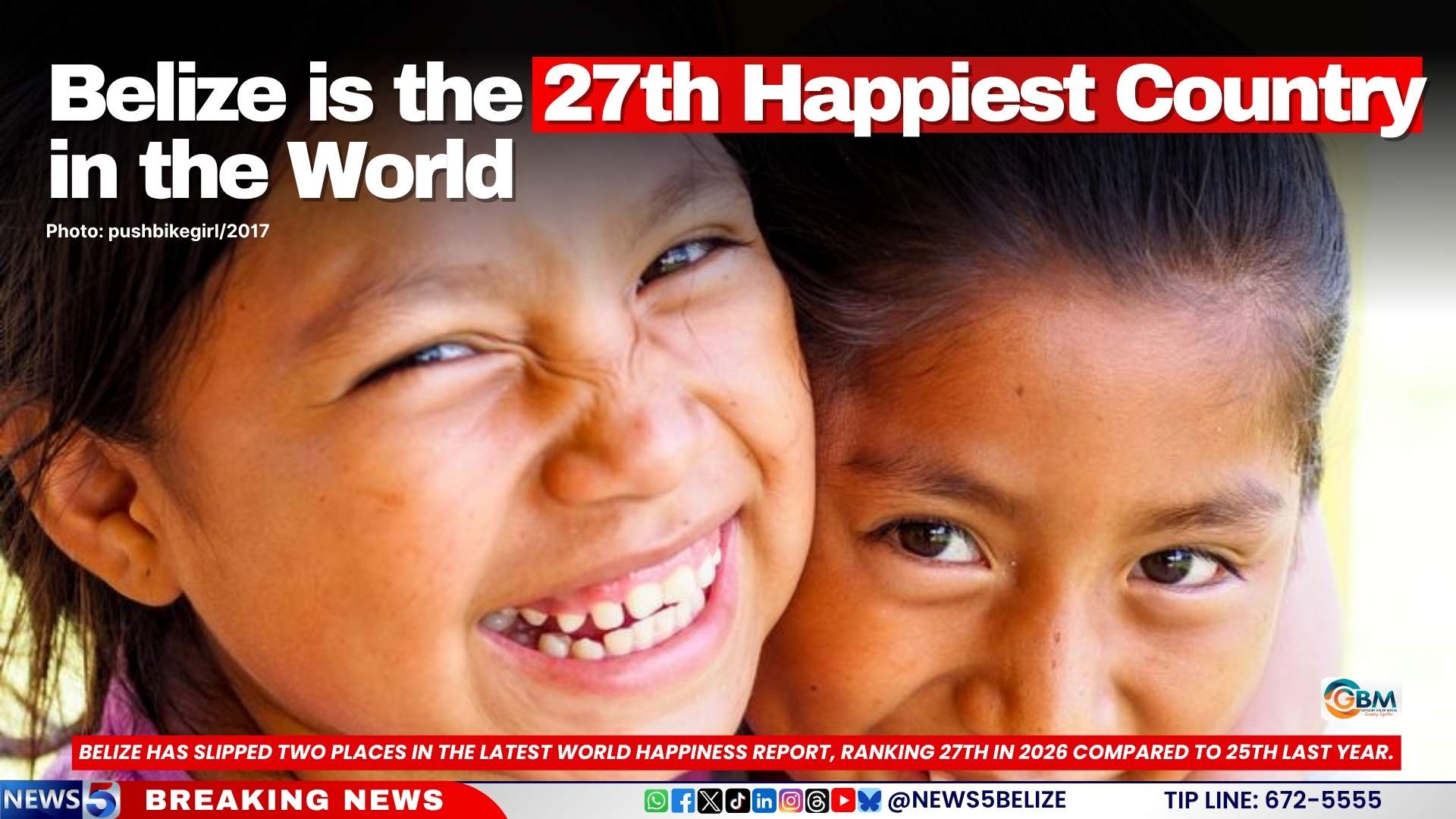
In the newly released 2026 World Happiness Report, Belize has experienced a slight decline in global rankings, moving from 25th to 27th position among 140 nations surveyed. The comprehensive study, collaboratively produced by Gallup, the Oxford Wellbeing Research Centre, and the UN Sustainable Development Solutions Network, evaluates subjective well-being through a multifaceted lens that extends beyond mere economic indicators.
The report’s methodology incorporates a three-year average of self-assessed life evaluations, complemented by six key variables: gross domestic product per capita, social support networks, healthy life expectancy, perceived freedom to make life choices, general generosity, and perceptions of corruption within institutions. This holistic approach provides a nuanced understanding of national happiness levels that transcends simple economic metrics.
Nordic nations maintained their stronghold on the upper echelons of the rankings, with Finland securing the top position for an unprecedented ninth consecutive year. Iceland and Denmark followed closely, continuing their tradition of exceptional performance. Analysts attribute Finland’s consistent success to its robust social welfare infrastructure, high levels of institutional trust, and minimal perceived corruption.
The most remarkable development emerged from Latin America, where Costa Rica achieved a groundbreaking fourth-place ranking—marking the first instance in the report’s 14-year history that a Latin American nation has broken into the top five. This achievement highlights the country’s exceptional performance in social and environmental metrics despite its moderate economic output.
Meanwhile, major English-speaking economies continued to trail behind their European counterparts, with the United States ranking 23rd, Canada at 25th, and the United Kingdom at 29th position. Despite their considerable economic advantages, these nations consistently demonstrate lower performance in social support and perceived corruption metrics.
The annual report serves as a critical benchmark for policymakers worldwide, emphasizing that national well-being encompasses far more than economic prosperity alone.