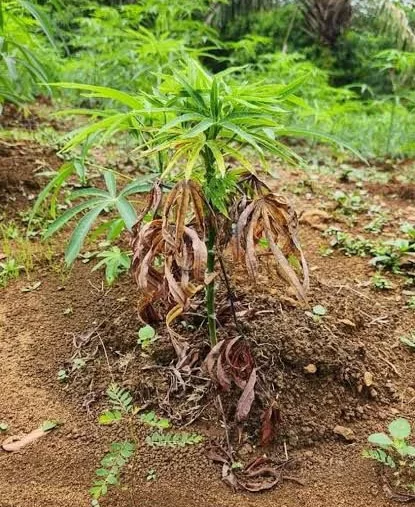
Suriname is confronting a severe agricultural emergency as an aggressive cassava disease continues to devastate crops across the nation after nearly two years of uncontrolled spread. The viral infection, identified as cassava mosaic disease, has reached epidemic proportions, destroying vast agricultural fields and threatening food security for thousands of families.
The pathogen, which causes severe leaf discoloration, growth stagnation, and drastic yield reduction, spreads rapidly through contaminated plant material and insect vectors such as whiteflies. What began as an agricultural concern has now escalated into a full-blown national crisis, with once-fertile fields transformed into barren landscapes without harvestable produce.
Cassava serves as the staple food for interior communities and remains a cherished crop nationwide for producing traditional foods including bojo and chips. The escalating disease now directly endangers the nutritional security of these populations, creating acute food shortages in remote regions.
Despite repeated warnings from agricultural experts and clear recommendations to declare a phytosanitary emergency—mirroring responses implemented in neighboring Brazil and French Guiana—the Ministry of Agriculture, Livestock, and Fisheries has largely limited its response to media statements. The absence of coordinated action has facilitated mass disease propagation across agricultural regions.
The Scientific Bureau of DNL, through chairman Rakesh Jhagroe, has issued an urgent call for immediate government intervention. Their comprehensive demands include: immediate destruction of infected fields; halting cassava cutting imports; producing disease-free planting material through CELOS; providing direct support to interior farmers; establishing cross-border collaboration with Brazil and French Guiana; creating a national emergency command for coordination; and implementing intensive awareness campaigns for village communities and agricultural workers.
Without immediate national mobilization, Suriname stands on the brink of complete cassava production collapse, potentially eliminating the primary food source for thousands of households. Delayed action could precipitate a humanitarian disaster with far-reaching consequences for the nation’s food sovereignty and rural livelihoods.