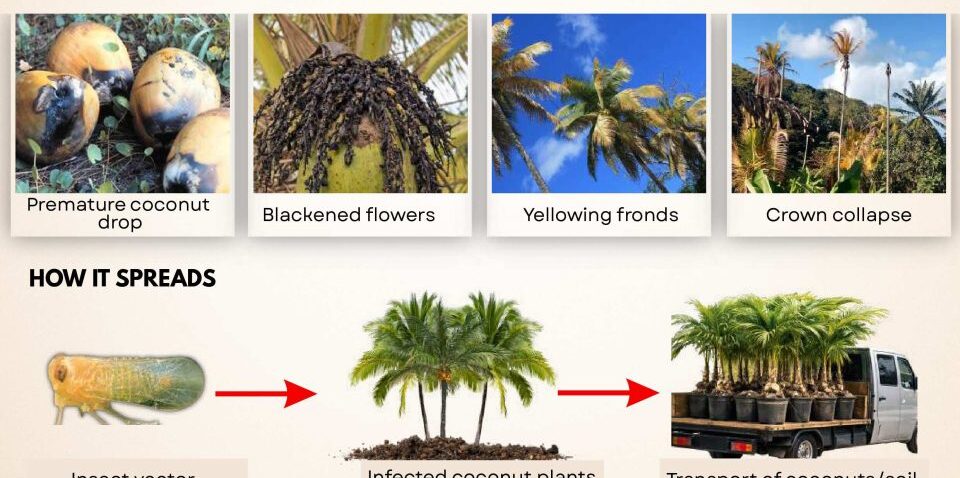
Dominica’s agricultural sector faces an unprecedented crisis as authorities confirm the arrival of Lethal Yellowing Disease (LYD), a devastating pathogen that threatens to decimate the nation’s coconut cultivation industry. The Ministry of Agriculture, Fisheries, Blue and Green Economy has officially verified the presence of this highly destructive disease affecting coconut and ornamental palms after comprehensive field investigations and laboratory analysis of samples from the Woodford Hill region in the North East Agricultural District.
The disease, transmitted by the plant hopper (Myndus Crudus), triggers rapid palm deterioration, typically killing infected trees within three to six months. This confirmation has triggered immediate emergency protocols due to the disease’s documented history of causing substantial economic damage across multiple Caribbean nations including Jamaica, St Kitts and Nevis, Cuba, the Bahamas, Antigua and Barbuda, and Guadeloupe.
In response to this agricultural emergency, authorities have implemented a multi-faceted containment strategy. The Woodford Hill area has been designated as a quarantine zone or ‘red zone’ where coconut removal is strictly prohibited. Emergency measures include intensified surveillance, targeted destruction of infected and suspected palms, and rigorous sanitation procedures to prevent further spread.
Beyond the immediate containment efforts, the government has launched extensive public awareness campaigns and community consultations to foster cooperation. Residents are urged to report symptoms including premature nut drop, blackening of flower clusters, or crown loss in palms. Transportation of coconut planting materials from affected areas is forbidden without official authorization from agricultural authorities.
The ministry emphasized that coconuts represent one of Dominica’s ‘5 C’s’ priority crops, playing an indispensable role in supporting rural livelihoods through various economic activities including water nut sales, craftsmanship, small-scale industries, food processing, and local cuisine. Early detection and rapid response have been identified as critical components in the national effort to eradicate this threat to food security and economic stability.
Regular updates on monitoring and response activities will be communicated to the public as the government continues its efforts to contain this significant agricultural threat.