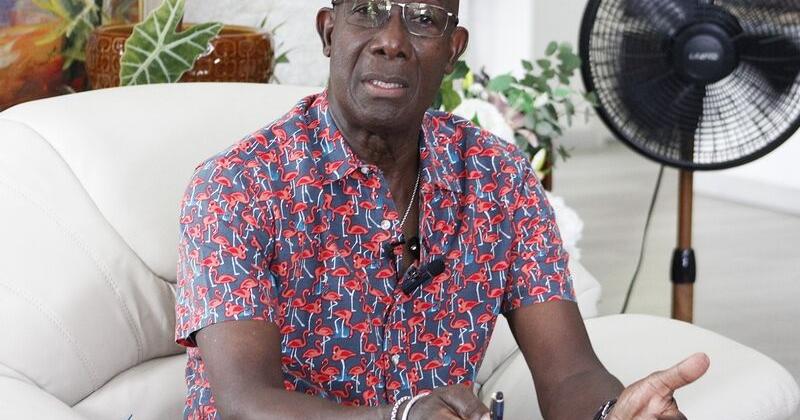
Trinidad and Tobago’s political landscape has been rocked by a severe verbal confrontation between current and former leadership, culminating in allegations of misogyny and systematic dishonesty. The controversy erupted when former Prime Minister Dr. Keith Rowley employed the derogatory term “jamette”—a historically charged Trinidadian epithet implying promiscuity and low social standing—to characterize sitting Prime Minister Kamla Persad-Bissessar.
Rowley’s inflammatory remarks came during a Tuesday news conference at his Glencoe residence, constituting a direct response to the Prime Minister’s parliamentary allegations from the previous Friday. Persad-Bissessar had asserted that the opposition People’s National Movement (PNM) financed its headquarters, Balisier House, with narco-trafficking proceeds and maintained connections to pedophile networks.
In a scathing Wednesday rebuttal, Barry Padarath, Minister within the Office of the Prime Minister and Member for Couva South, denounced Rowley’s language as revealing “arrogance, misogyny and moral collapse.” Padarath characterized the former leader’s behavior as a public “meltdown” indicative of a “bitter man whose collapsing legacy rests on contradiction and chronic distortion of facts.”
The minister contextualized the exchange within Trinidad and Tobago’s broader societal challenges, noting that Rowley had chosen insult over substance despite widespread issues of gender-based abuse and economic pressure affecting women. Padarath identified a persistent pattern of fabrication in Rowley’s political conduct, citing historical controversies including the Police Merit List debacle, disputed Interpol watchlist claims, the Emailgate scandal, and Petrotrin’s controversial closure.
Further undermining Rowley’s credibility, Padarath highlighted the PNM’s public correction of its former leader’s claim regarding exclusion from the party’s 70th anniversary celebrations. Official invitations dated January 2026 were produced, directly contradicting Rowley’s assertions.
The minister concluded that Rowley’s conduct reflects “pathological dishonesty” and represents the outbursts of a former leader unable to accept his diminished political relevance, ultimately warning that such behavior damages national discourse and demonstrates how abuse has replaced accountable leadership.