The ongoing military escalation between the United States, Israel, and Iran has triggered a catastrophic humanitarian emergency that now threatens to push tens of millions into severe food insecurity worldwide, according to United Nations agencies. What began as regional conflict has evolved into a global crisis with devastating ripple effects on food distribution systems, humanitarian aid routes, and essential supply chains.
Carl Skau, Deputy Executive Director of the World Food Programme (WFP), revealed that attacks launched against Iran since February 28th have critically disrupted vital humanitarian corridors. This disruption has created dangerous delays in life-saving deliveries to some of the world’s most vulnerable crisis zones. Shipping costs have surged by 18% since the conflict’s inception, forcing costly rerouting of essential shipments that now face both logistical and financial barriers.
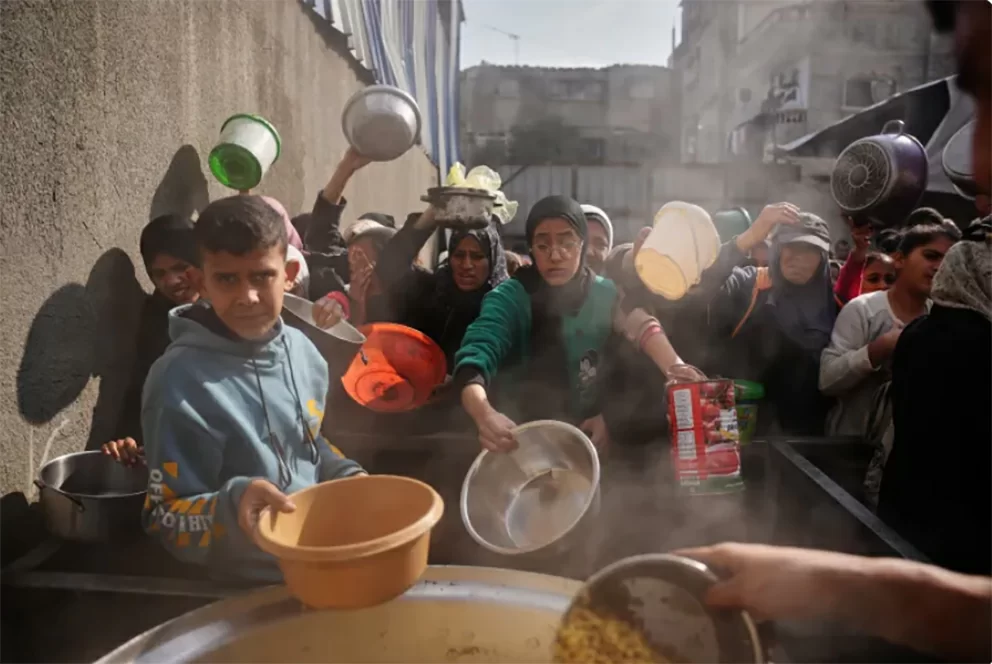
The situation is particularly dire in Gaza, where residents face desperate shortages amid ongoing blockades. The closure of the Rafah crossing with Egypt has severely exacerbated the humanitarian situation, with only approximately 200 aid trucks managing to enter daily—far below the minimum requirement of 600 trucks identified by the World Health Organization. Meanwhile, in Sudan, months of fighting between military regimes and paramilitary groups have plunged the nation into chaos, leaving nearly half the population—over 21 million people—experiencing acute hunger, with famine conditions officially declared in some regions.
Beyond immediate hunger concerns, millions across Iraq, Iran, and neighboring countries face immense psychological distress from continuous violence and displacement. Hundreds of thousands lack adequate shelter, clean water, and medical care, while mental health issues surge due to persistent trauma and fear. Rising costs of food, fuel, and basic necessities disproportionately affect the poorest populations, with growing unemployment and diminished purchasing power creating social tensions and long queues for essential goods.
Humanitarian organizations now struggle with limited access to affected areas due to security constraints and political obstacles. The combination of escalating costs, constrained donations, and complex logistics has created a perfect storm that hinders timely delivery of critical assistance, pushing global food systems to the brink of collapse.