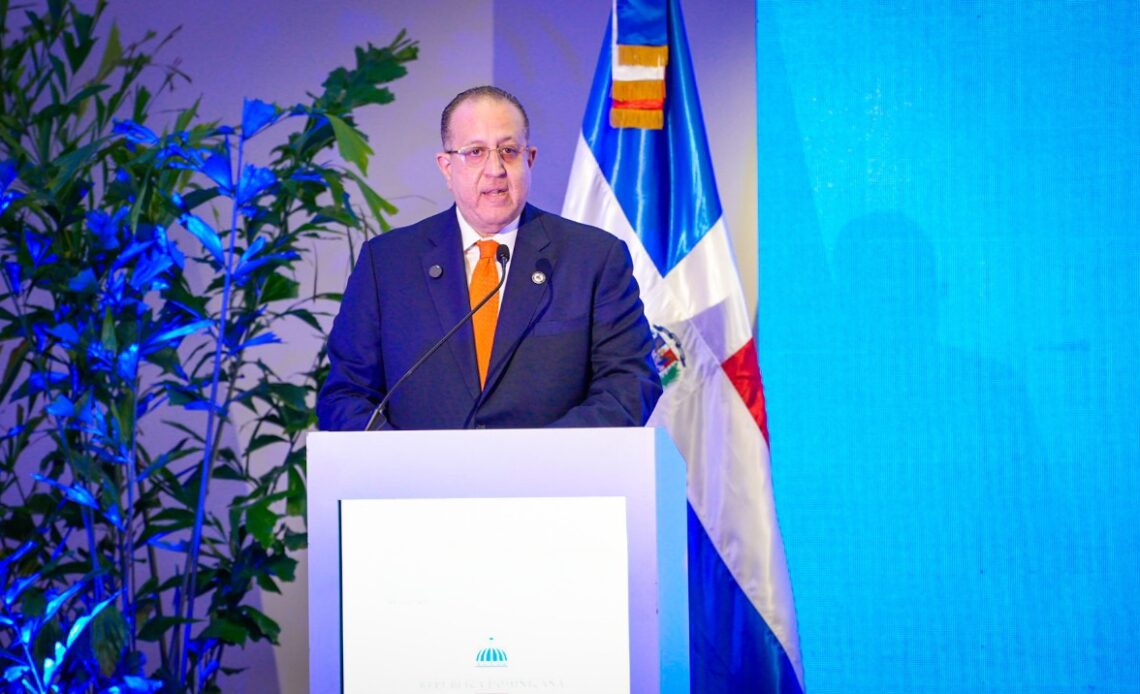
SANTO DOMINGO – Finance and Economy Minister Magín Díaz has unveiled a comprehensive governmental strategy designed to insulate the Dominican Republic’s economy from escalating global instability, primarily fueled by the Iran crisis and subsequent surges in international oil prices. The administration’s core objective centers on preserving macroeconomic stability as the fundamental defense against external economic pressures.
Minister Díaz confirmed that authorities are implementing targeted measures to mitigate the domestic impact of increasing fuel costs and to ensure an uninterrupted supply of essential commodities. This proactive approach involves continuous inter-institutional coordination with key bodies, including the Ministry of Agriculture and the Central Bank, to uphold both economic and social equilibrium.
A critical element of the nation’s defensive financial planning was the early securing of a substantial portion of its 2026 national budget financing. This forward-thinking maneuver has created vital fiscal flexibility, enabling the potential reallocation of resources to support vulnerable economic sectors should the need arise. Díaz further pointed to the country’s robust credit rating and ample liquidity within its financial system as pivotal assets. These strengths provide the government with access to international funding under favorable conditions, forming a crucial buffer.
While acknowledging that higher oil prices inevitably pressure electricity generation and other areas, the Minister expressed confidence that the nation’s increasingly diversified energy matrix would significantly dampen the shock compared to previous economic crises. He contextualized the current challenge as the latest in a series of consecutive global shocks, following the COVID-19 pandemic, the Russia-Ukraine conflict, persistent trade tensions, and an environment of high worldwide interest rates.
Addressing fiscal policy, Díaz recognized the longstanding constraint of a structural deficit, which hovers near 3% of GDP and has historically curtailed public investment. Emphasizing a forward path, he stressed the imperative to ramp up infrastructure expenditure to catalyze economic growth and foster private sector development. Concurrently, he advocated for enhancing efforts to combat tax evasion and amplify government revenue streams to support these ambitions.