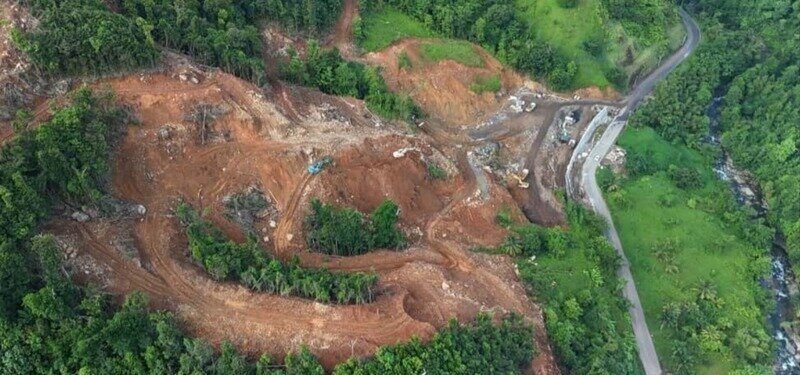
The Commonwealth of Dominica, celebrated as the Caribbean’s ‘Nature Island,’ faces a profound environmental and governance crisis as Chinese state-owned enterprise China Railway No. 5 Engineering Group (CR5) continues alleged mining operations despite an official stop order issued December 1, 2025. The Development and Planning Corporation of Dominica invoked the Physical Planning Act Chap 63:05 to halt activities in Stonefield, Concord, where sensitive ecological zones including the Deux Branches watershed, Northern Forest Reserve, and Pague River ecosystem remain threatened.
This confrontation represents more than environmental concern—it embodies a critical test of national sovereignty and regulatory enforcement capacity. Since establishing diplomatic relations with China in 2004, Dominica has undergone substantial infrastructure transformation through Chinese-funded projects including government buildings, sports facilities, hospitals, and road networks. While international development partnerships provide essential resources for small island states, the apparent disregard for local regulations raises alarming questions about institutional authority.
The situation highlights broader geopolitical dynamics as China expands its economic footprint across the Caribbean through infrastructure investments and concessional financing. Dominica’s strategic location between Guadeloupe and Martinique, adjacent to major maritime routes, adds significance to these developments that are closely monitored by international policymakers.
Diaspora communities express growing apprehension that citizen voices are being marginalized as environmental degradation risks escalate. The case exemplifies challenges faced by developing nations with limited oversight resources when confronting powerful multinational corporations linked to major economies.
Beyond immediate environmental implications—where damage to watersheds and forest reserves could be irreversible—this standoff tests the fundamental principles of democratic governance and rule of law. The outcome will determine whether development occurs through transparent, sustainable processes that respect local regulations, or through external imposition that undermines national sovereignty.
Dominica’s leadership now faces a defining moment: enforce environmental protections and regulatory decisions to preserve both ecological heritage and governance integrity, or allow external actors to circumvent domestic law. The resolution will resonate throughout the Caribbean region and beyond, signaling the balance between development needs and sovereign authority in an era of intensified global competition.