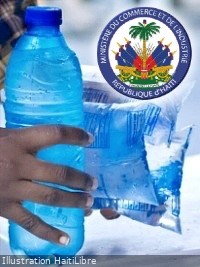
The Haitian Ministry of Commerce and Industry (MCI), under Minister James Monazard, has issued a decisive regulatory mandate to all drinking water treatment and distribution companies. This action follows a circular published on March 2, 2026, which formally outlines the stringent requirements for operators in this critical sector. A firm deadline of March 22, 2026, has been established for full compliance, marking a significant governmental effort to confront a longstanding public health crisis linked to contaminated water.
The regulatory framework is anchored in Articles 5 and 6 of a March 11, 2020 decree governing food production and trade. The comprehensive compliance checklist mandates that every entity, from large-scale producers to local water kiosks, must be formally registered with the MCI and possess a valid Professional Identification Card (CIP). Operations must adhere to strict Good Hygiene Practices (GHP), requiring fully enclosed transportation vehicles to shield packaged water, particularly sachets, from environmental contaminants and sunlight.
Material safety is paramount, with regulations specifying that all containers, especially sachets, must be constructed from inert, non-toxic, and officially approved food-contact materials that offer optimal heat resistance. Mandatory labeling must conform to consumer protection statutes detailed in Article 10 of the 2020 decree.
From a microbiological standpoint, the policy adopts a zero-tolerance stance against pathogenic germs, including Escherichia coli and various coliforms. Companies are obligated to conduct monthly bacteriological analyses through accredited laboratories and present these valid certificates during official health inspections.
Further provisions require suppliers to guarantee the rigorous disinfection of their tanker trucks and their customers’ storage tanks prior to any delivery. A robust traceability system must be implemented, complete with defined expiration dates for products sold at kiosks, which must also retain valid transaction receipts. Kiosks are additionally required to install advanced purification devices, such as UV lamps or ozonators, to neutralize any bacterial presence. Finally, companies must employ qualified technical staff specialized in water treatment and quality control to monitor operations and implement corrective measures.
The MCI has announced it will deploy inspectors to verify the quality of distributed water and the sanitary conditions of all concerned operations. The Directorate has called for full cooperation from all stakeholders to ensure public health protection and adherence to the newly enforced national standards.