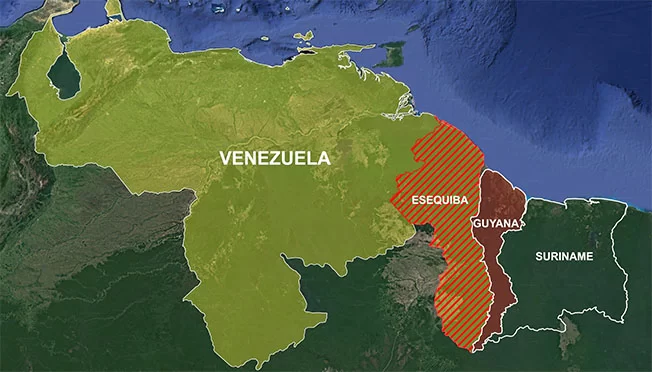
Diplomatic tensions between Guyana and Venezuela have intensified significantly following a contentious dispute over planned hydrocarbon activities in maritime zones adjacent to the historically contested Essequibo region. The Venezuelan government in Caracas has issued strong objections to Guyana’s announced seismic research program, denouncing it as “unilateral and illegitimate actions” within waters that Venezuela claims remain subject to unresolved maritime boundaries.
Georgetown has firmly rebuffed these criticisms, asserting that Venezuela holds no legal jurisdiction over the coastal waters off Essequibo and maintaining that the exploratory activities fall entirely within Guyana’s exclusive economic zone. The controversial program includes comprehensive 3D seismic surveys covering approximately 25,000 square kilometers of offshore territory, aimed at identifying new petroleum reserves beneath the ocean floor.
This latest escalation is intrinsically linked to Guyana’s rapid emergence as a global energy player. Since discovering substantial offshore oil deposits, the nation has transformed into one of the world’s fastest-growing economies, with exploration concentrated in the resource-rich Guyana-Suriname Basin that has attracted significant international energy investment.
Venezuela perceives these developments as direct challenges to its historical territorial claims. The Caracas administration has repeatedly warned that natural resource exploitation in the disputed zone cannot proceed without mutual agreement between the neighboring nations.
The Essequibo conflict traces its origins to the colonial era, centering on a vast 160,000-square-kilometer territory that constitutes approximately two-thirds of Guyana’s landmass. Guyana bases its sovereignty on an 1899 international arbitration award that established boundaries favoring what was then British Guiana. Venezuela has consistently rejected this ruling, maintaining the territory has historically belonged to its domain.
The longstanding dispute now rests with the International Court of Justice in The Hague. While Guyana seeks judicial confirmation of the 1899 arbitration validity, Venezuela has historically contested the Court’s jurisdiction in this matter.
Regional observers throughout the Caribbean and South America are monitoring the situation closely, particularly given the strategic importance of the newly discovered petroleum reserves. Diplomatic sources indicate concerns that tensions could further escalate pending the international court’s definitive ruling on the border determination.
The stakes are exceptionally high for Guyana, where the oil industry has become the primary engine of economic expansion. Conversely, Venezuela considers the Essequibo matter a historically sensitive political issue that frequently triggers diplomatic confrontations between the nations.
International analysts anticipate continued friction around the Essequibo controversy until the International Court of Justice delivers a final and binding decision regarding the disputed border demarcation.