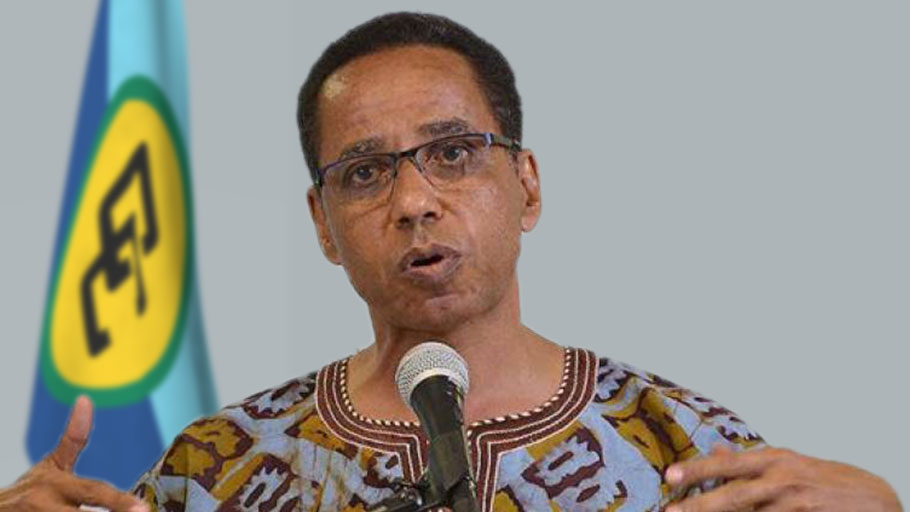
A significant debate is unfolding within the Caribbean Community (CARICOM) regarding the fundamental principle of foreign policy coordination among member states. David Comissiong, a prominent Caribbean citizen, has issued a powerful rebuttal to emerging arguments that suggest divergent foreign policies are a strategic strength for the bloc. Grounding his analysis in the Revised Treaty of Chaguaramas, Comissiong asserts that collective action is not merely beneficial but a treaty-mandated obligation for confronting external pressures.
The treatise meticulously cites the treaty’s foundational articles. Article 6 explicitly lists objectives including achieving ‘a greater measure of economic leverage’ with third-party states and ‘enhanced coordination of Member States’ foreign and foreign economic policies.’ Furthermore, Article 16 mandates the Council for Foreign and Community Relations (COFCOR) to ‘establish measures to coordinate the foreign policies of the Member States’ and ‘seek to ensure… the adoption of Community positions on major hemispheric and international issues.’
This legal framework, Comissiong argues, is rooted in a historic precedent. He recalls the bold, unified action of CARICOM’s four founding members—Jamaica, Trinidad & Tobago, Guyana, and Barbados—who in October 1972 collectively resolved to establish diplomatic relations with Cuba. This coordinated move successfully defied the U.S. and OAS policy of isolating the island nation, creating a progressive precedent followed by many others. Their strength, the author emphasizes, was derived from acting as a ‘seamless, unified quartet.’
The analysis then pivots to a contemporary crisis: the demand from the U.S. Trump administration in March 2025 for CARICOM nations to terminate their medical cooperation programs with Cuba. Comissiong highlights the initial, principled resistance voiced by several leaders. Grenada’s Prime Minister Dickon Mitchell rejected capitulation, while Prime Ministers Gonsalves, Rowley, and Mottley separately vowed to defend their sovereign right to engage Cuban health professionals, even at the risk of losing U.S. travel visas.
Prime Minister Mia Mottley of Barbados, whose country does not currently employ Cuban medical staff, delivered a particularly instructive statement from the House of Assembly. She repudiated U.S. accusations of human trafficking, crediting Cuban medical professionals with saving ‘lives and limbs and sight for many a Caribbean person’ during the pandemic. Crucially, she declared her willingness to stand in unity with affected CARICOM peers, framing the issue as one of principle that required a collective, resolute response—a stance Comissiong interprets as a direct call for a unified CARICOM approach in keeping with the treaty.
However, the author laments that this wise counsel did not prevail. Instead, the current landscape is marked by individual member states attempting solitary negotiations with the powerful U.S. administration. The predictable outcome, Comissiong notes, has been the termination or substantial rolling back of several vital medical cooperation programs—a result he deems ‘very regrettable’ given the clear guidance from the treaty and history.
In conclusion, Comissiong invokes the timeless adage, ‘United we stand, divided we fall,’ tracing its wisdom from Aesop’s fables to biblical scripture. He urges his CARICOM brethren to reclaim this principle, clarifying that ‘unity is not necessarily unanimity.’ Drawing a parallel to the newly inaugurated CARICOM Full Free Movement Regime, he argues that effective collective action is possible even without every single member state on board. The author’s final plea is for a determined pursuit of the greatest possible unity to navigate the thorny geopolitical issues of the day, ensuring that ‘1 from 10 no longer leaves 0.’