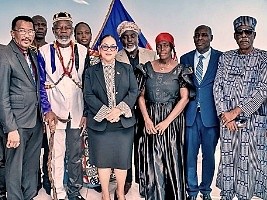
In an unprecedented move signaling a new era of collaboration, Haiti’s Ministry of Religious Affairs hosted its first-ever gathering of national religious leaders on March 13, 2026. Minister Raina Forbin, overseeing both Foreign Affairs and Religious Affairs, convened representatives from diverse religious denominations at the ministerial headquarters, marking a transformative approach to governance.
The landmark meeting, characterized by officials as a ‘historic first,’ establishes a formal framework for institutional dialogue between the Haitian government and the nation’s moral and spiritual leadership. Director General of Religious Affairs Joël Turenne emphasized the unprecedented nature of this initiative, highlighting its significance in recognizing religious communities as essential partners in national development.
Minister Forbin articulated the government’s vision of integrating religious communities as vital contributors to addressing Haiti’s pressing security and social challenges. She identified religious leaders as crucial moral guides whose influence extends beyond spiritual matters into the realms of social cohesion and civic values education.
Central to the minister’s address was the assertion that lasting stability requires not only institutional action but also moral commitment from all societal sectors. She positioned religious communities as indispensable partners in consolidating national values of unity, solidarity, and hope during this critical period in Haiti’s development.
The ministry announced plans to convene a National Conference of Religious Leaders, creating a structured platform for ongoing state-religious dialogue. This initiative aims to systematically promote peace culture, strengthen social cohesion, and mobilize consensus around fundamental national values including responsibility and national solidarity.
Religious representatives responded enthusiastically to the announcement, welcoming this new chapter of cooperation as a significant advancement in state-community relations that recognizes their essential role in Haiti’s social fabric.