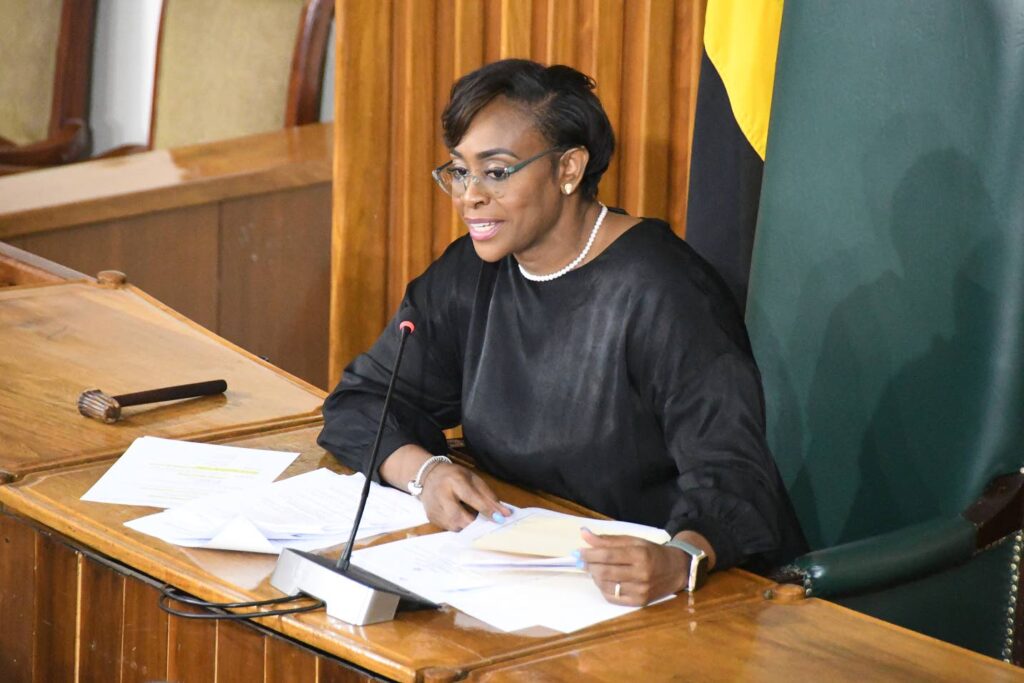
Jamaica’s parliamentary proceedings descended into renewed acrimony on Wednesday as tensions within the Public Administration and Appropriations Committee (PAAC) reached boiling point. Juliet Holness, Member of Parliament for St Andrew East Rural and Speaker of the House, launched a direct challenge against Committee Chairman Peter Bunting’s leadership, accusing him of systemic bias in managing committee proceedings.
The confrontation emerged during deliberations about the fundamental scope and authority of the PAAC, with Holness contending the committee has progressively exceeded its mandated jurisdiction. She specifically criticized Bunting’s management approach, asserting his recognition of speakers demonstrated partiality rather than neutral procedural oversight. “I observed, for my first two meetings, I remember asking a question and being rushed while other members were allowed to extend their questioning indefinitely,” Holness stated.
Beyond procedural concerns, Holness expressed profound frustration with what she characterized as widespread disrespect and inadequate preparation among committee members. She notably suggested some legislators rely on artificial intelligence tools rather than substantive understanding, remarking that “some fast learners continue to be stupid and use chatGPT for their questions.”
The central constitutional question revolved around whether the PAAC should maintain narrow focus on expenditure review or expand into broader administrative efficiency examinations. Holness maintained the committee should concentrate exclusively on monitoring how approved public funds are utilized, particularly during budget cycles.
Chairman Bunting vigorously defended his interpretation of the committee’s mandate under Standing Order 73A, arguing for a more expansive view of its responsibilities. He contended that jurisdictional overlap is inevitable when examining large-scale government programs that cross multiple sectors. Using hurricane recovery efforts as an example, Bunting explained such initiatives naturally encompass infrastructure, education, and other domains, making narrow jurisdictional boundaries impractical.
In response to accusations of partiality, Bunting asserted his leadership maintains careful neutrality. “The fact that from time to time members on both sides may be upset with me suggests to me that I am achieving impartiality,” he countered, drawing parallels to Holness’s own responsibilities as House Speaker.
The dispute represents an institutional crisis concerning parliamentary oversight mechanisms and the appropriate boundaries between specialized committees in Jamaica’s governance structure.