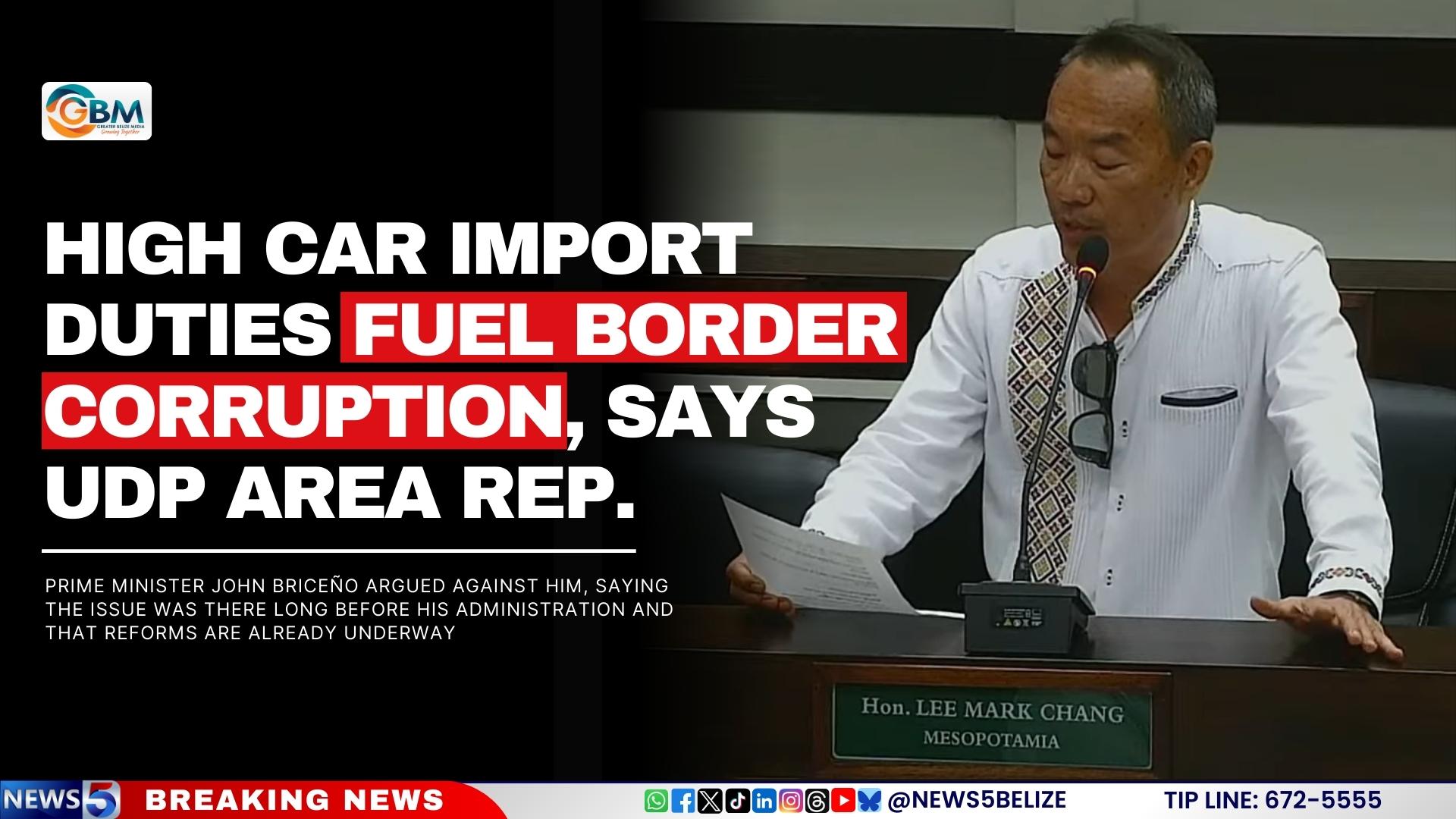
BELIZE CITY – A contentious debate erupted in Belize’s House of Representatives on March 11, 2026, as allegations of systemic corruption at border customs checkpoints took center stage. Mesopotamia area representative Lee Mark Chang of the opposition UDP party presented claims that customs officers are accepting illicit payments from vehicle importers seeking reduced duty rates.
Chang asserted that prohibitively high import taxes, particularly on vehicles older than five years, have created an environment conducive to corruption. “The fundamental solution lies in eliminating the incentive for corruption through substantial duty reductions,” Chang argued during the adjournment debate. “These older vehicles represent the primary transportation option for working and middle-class citizens, yet current policies push importers toward illegal arrangements.”
Prime Minister John Briceño countered that the corruption predates his administration and highlighted ongoing reforms within the customs valuation system. “We’ve implemented adjustments that eliminate residual value calculations and empower customs officers to authorize legitimate discounts,” Briceño stated.
The Prime Minister acknowledged rising compliance costs under the tightened system but emphasized collaborative efforts between the Finance Ministry, Customs Department, and importers to establish equitable solutions. Briceño presented a compelling economic argument that reducing official tax rates could potentially increase government revenue by diverting payments from illegal channels to legitimate tax collection.
The exchange underscores ongoing tensions between revenue protection and corruption prevention in Belize’s import regulation framework, with significant implications for both governance integrity and consumer affordability.