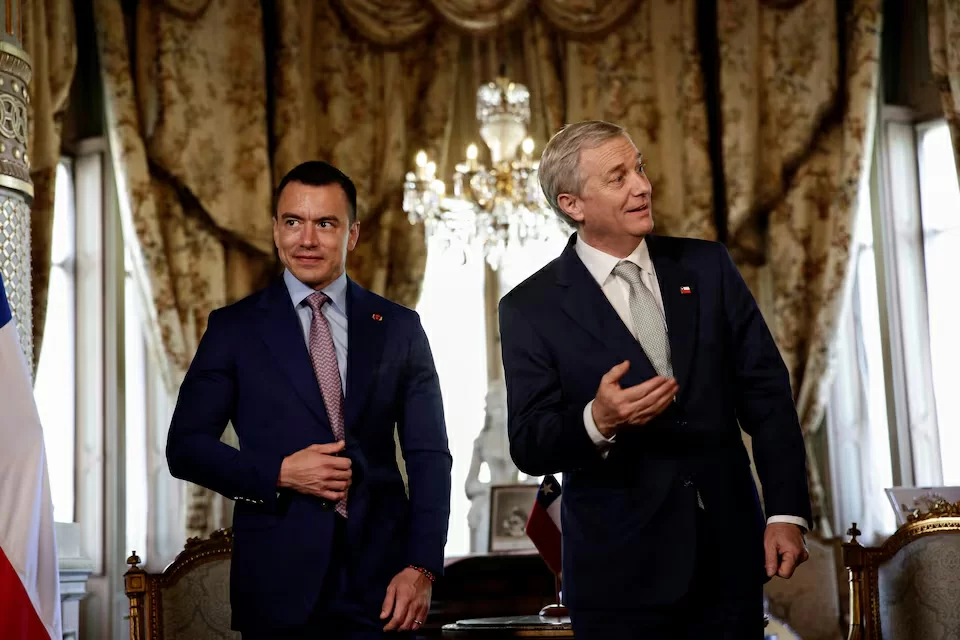
Chilean President José Antonio Kast assumes office Wednesday amidst mounting global economic challenges that threaten to undermine his ambitious reform agenda. Elected in December on promises of robust economic growth and deregulation, Kast now confronts a dramatically altered international landscape shaped by the Iran conflict’s disruptive impact on worldwide markets.
Political analyst Kenneth Bunker of San Sebastian University warns that current volatility in exchange rates, inflation, and economic growth may significantly complicate implementation of Kast’s plans. “If the anticipated growth rate fails to materialize, numerous policy measures could face substantial delays,” Bunker cautioned.
As the world’s largest copper producer and second-largest lithium supplier, Chile remains particularly vulnerable to international commodity price fluctuations. Copper prices surged from below $10,000 per ton in June 2025 to a peak of $13,618 by January’s end, generating hundreds of millions in additional treasury revenue. Pre-conflict estimates suggested Chile could gain up to $4 billion from elevated copper prices, though recent weeks have seen prices drop 8% from their peak before showing slight recovery.
The nation’s economic challenges are compounded by its status as one of Latin America’s largest oil importers. With crude prices approaching $120 per barrel since the conflict’s onset, Chile faces intensified inflationary pressures. An Oxford Economics report identifies Chile among the hardest-hit regions globally—alongside Central and Eastern Europe and India—with inflation potentially increasing by 0.4 to 1.7 percentage points in the second quarter.
University of Santiago economist Marcela Vera emphasizes Chile’s structural vulnerability: “Our economy possesses limited financial protection mechanisms and remains heavily dependent on free trade agreements and primary exports.” Despite initial market optimism that propelled the Chilean stock market (IPSA) to a 65% year-on-year peak in January, subsequent declines exceeding 10% have occurred, with the peso losing approximately 5% of its value since February.
Chile’s fuel price stabilization fund (MEPCO) operates to cushion price hikes through three-week adjustment cycles, though JPMorgan analysis indicates the mechanism cannot fully neutralize rising oil price effects. December inflation expectations have been revised upward to 3.6%, with risks tilted toward further increases.
Vera warns that prolonged conflict could transform temporary economic disruptions into chronic conditions: “The impact extends beyond higher oil prices to include elevated logistics costs and a stronger dollar.” President Kast now faces the formidable challenge of delivering on economic growth promises within an increasingly volatile global economic environment.