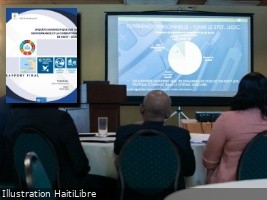
A groundbreaking diagnostic survey on governance and corruption in Haiti, jointly presented by the United Nations Development Programme (UNDP-Haiti) and the nation’s Anti-Corruption Unit (ULCC), has revealed staggering levels of institutional corruption severely impacting the Caribbean nation.
The comprehensive assessment, conducted throughout 2025, demonstrates that corruption in Haiti transcends abstract conceptuality, manifesting as a concrete barrier to development that imposes substantial hidden costs on households, undermines business competitiveness, and systematically erodes public trust in governing institutions.
The empirical data presents a damning indictment of Haiti’s governance landscape: an overwhelming 92% of surveyed respondents characterize corruption levels as critically high; 71% of Haitian households report observable deterioration in public service delivery; 90% of businesses identify corruption as their primary obstacle to market competitiveness; and 67% attribute the phenomenon’s persistence to deep-rooted institutional failures within public sector frameworks.
A particularly significant finding emerges regarding corruption’s gendered dimensions, with 52% of respondents indicating women experience disproportionately severe impacts from systemic corruption. This gender-differentiated effect highlights previously underrecognized vulnerabilities within Haiti’s socioeconomic fabric.
The UNDP emphasizes that these documented realities necessitate immediate implementation of robust protective mechanisms, enhanced alert systems, and strengthened enforcement protocols. The organization further stresses that integrating gender-responsive approaches into governance policy frameworks constitutes an essential requirement rather than optional consideration.
This diagnostic survey represents not a conclusion but a foundational starting point for Haiti’s renewed anti-corruption efforts. The empirical findings will directly inform development of the new National Anti-Corruption Strategy currently being formulated under ULCC leadership, marking a critical step toward addressing one of Haiti’s most persistent governance challenges.