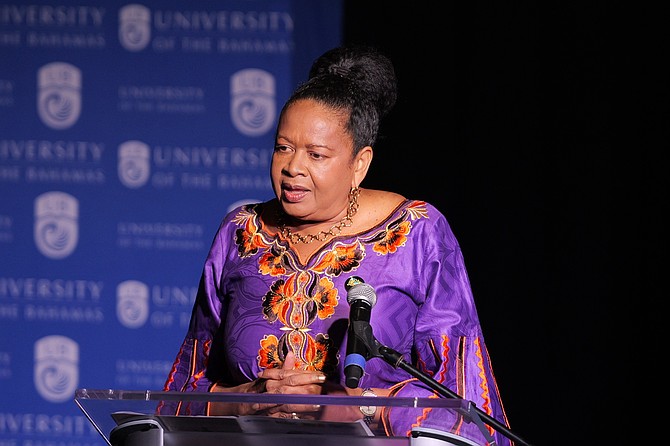
A former chair of the United Nations Permanent Forum on People of African Descent has called upon Caribbean governments to escalate their campaign for reparatory justice, emphasizing that sustainable development remains unattainable without confronting the enduring legacies of slavery and colonialism. Dr. June Soomer, formerly Saint Lucia’s ambassador to CARICOM and the Organisation of Eastern Caribbean States, delivered these remarks during the launch event for the UN’s Second Decade for People of African Descent, held at the University of The Bahamas.
Dr. Soomer articulated that the Caribbean’s leadership in the global reparations movement spans decades, not years. She traced the origins of the struggle back to the African coast, where enslaved individuals resisted even before their traumatic transatlantic passage. The modern regional agenda gained significant momentum in 2013 when CARICOM leaders formally committed to seeking justice for both Indigenous peoples and people of African descent. The CARICOM Reparations Commission first formally acknowledged the genocide of Indigenous populations before addressing the crimes of African enslavement.
A central pillar of Dr. Soomer’s address was the imperative to reframe historical narrative. She vehemently rejected the term ‘slaves,’ insisting on the formulation ‘enslaved people’ to underscore that individuals with established professions and identities were forcibly subjugated. She further highlighted active resistance to captivity, countering the myth of passive acceptance.
The former diplomat argued that the second UN decade must transcend symbolic gestures and catalyze structural reform. Key demands include comprehensive reviews of colonial-era constitutions and legislation, which she stated continue to perpetuate systemic racism and discrimination, particularly against women of African descent. Dr. Soomer expanded the concept of reparations beyond historical grievances to encompass contemporary issues like environmental injustice and technological bias. She noted the Caribbean’s disproportionate vulnerability to climate change impacts, despite its minimal contribution to global emissions, labeling it a form of ‘double reparations’ due to the legacy of being forced onto marginalized lands.
Dr. Soomer concluded with a call for strengthened collaboration between governments and civil society organizations to ensure the reparations movement maintains its momentum and achieves meaningful, collective rights for people of African descent.