PORT OF SPAIN – Caribbean telecommunications executives, regulators, and human resources leaders have issued a compelling call for a fundamental rethinking of regional competitiveness, arguing that technological infrastructure alone is insufficient without parallel advancements in human capital systems, governance, and leadership culture.
The consensus emerged during the inaugural CANTO HR Leadership Conference, hosted February 4-5, 2026, at the Hyatt Regency in Port of Spain. Titled “Elevating People, Power and Purpose — HR Leadership for a Globally Competitive Caribbean,” the event represented a strategic expansion of the annual CANTO Connect gathering, specifically addressing human capital challenges in the digital transformation era.
Cavelle Joseph-St Omer, President of the Human Resource Management Association of Trinidad and Tobago (HRMATT), delivered a keynote address positioning HR leadership as the critical nexus between technological capability and economic resilience. “Digital transformation has advanced across the Caribbean, with adoption rising significantly in recent years,” Joseph-St Omer noted. “Yet nearly 60% of regional companies still struggle to implement new technologies because they lack the skilled people to support them.”
She identified several priority areas where HR leadership must drive organizational change: developing AI-augmented workforces, fostering data-literate decision-making, building cyber-resilient cultures, implementing project governance aligned to digital delivery, and creating fluency in cloud and automation technologies. Most significantly, she drew a direct connection between governance quality and competitive advantage: “The Caribbean cannot achieve regional competitiveness without strong governance. Competitiveness is built on trust — and trust is built on people and systems.”
Liberty Caribbean executives provided concrete examples of people-first strategies in action. Dominic Boon, VP of People, revealed that 85% of the company’s leadership team comprises Caribbean talent, with half being women, demonstrating their commitment to equitable representation. “Diverse perspectives strengthen decision-making and help us build organizations that better reflect and serve our communities,” Boon emphasized.
The company’s approach includes trust-based flexibility, inclusive benefits, and replacing traditional performance reviews with Agile Performance Development (APD) that emphasizes growth conversations rather than numerical scoring. Valerie Brunken, People Experience Director, highlighted their flexible PTO policy as particularly impactful: “It’s one of the policies that can bring engagement, trust, collaboration to an organization,” especially valuable for enabling shared caregiving responsibilities.
A featured session on multi-generational workforce management, led by Debra Thomas, Chief Human Resources Officer at TSTT, addressed the unprecedented demographic complexity in Caribbean workplaces. “We now have 4 generations in the workplace, some say even 5,” Thomas observed. She challenged leaders to move beyond outdated policies designed for a different era and instead focus on understanding diverse communication styles, aspirations, and needs across age groups.
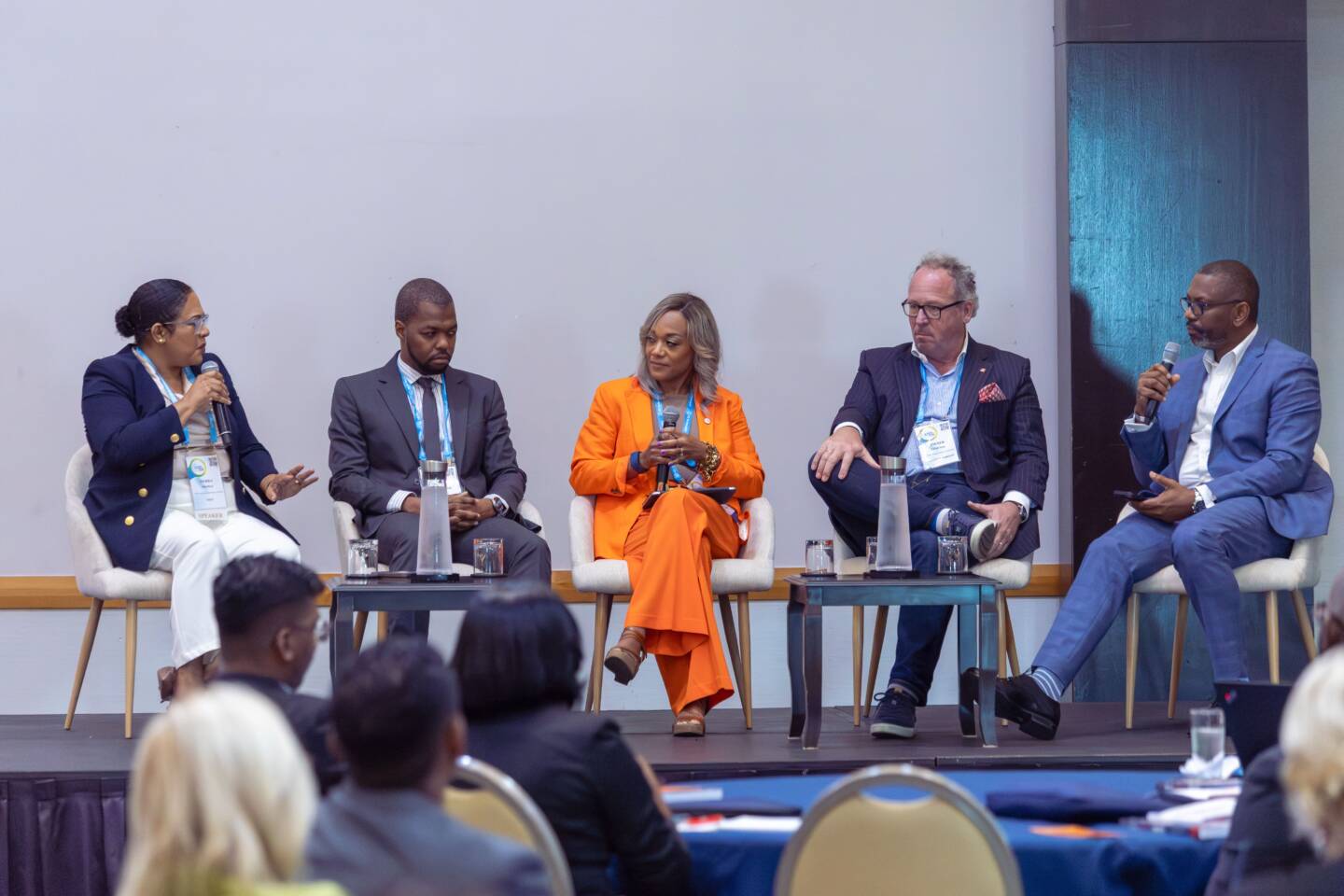
A CEO panel moderated by Richard Solomon of the Development Consulting Centre Ltd. explored how telecommunications leaders are shifting from infrastructure-centric narratives to people-centered outcomes. Simone Martin-Sulgan, Vice President and General Manager at FLOW, articulated this transformation: “We’re moving away from talking about tech and infrastructure, and becoming truly customer-obsessed. Our message isn’t ‘bigger, better, faster’ anymore — it’s about the real benefits in people’s lives.”
Charles Douglas, Vice Chairman of CANTO, framed HR strategy as a regional imperative, particularly for small, open Caribbean economies where talent mobility is high and competition is global. “As an industry, we are investing heavily in networks, digital platforms and emerging technologies such as AI,” Douglas stated. “But none of this delivers value without a workforce that is skilled, adaptable and engaged.”
The conference concluded with broad agreement that technology investments must be matched by equally sophisticated human capital strategies. Participants affirmed that future competitiveness will depend on people-centered governance, resilient leadership cultures, and HR strategies specifically aligned to digital transformation goals across the Caribbean region.