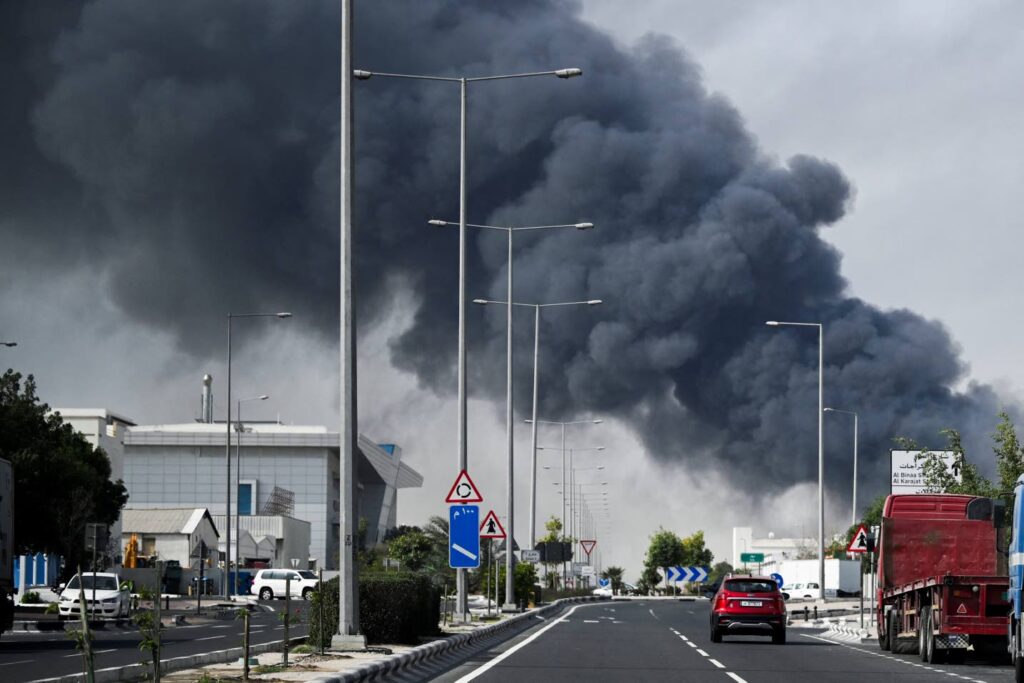
The skies over Doha have transformed into a theater of conflict, shattering the region’s longstanding reputation as a Middle Eastern oasis. For the Jamaican diaspora residing in Qatar, daily life now unfolds against a disquieting backdrop of air raid sirens, emergency phone alerts, and the spectacle of missile intercepts painting the atmosphere with thick black smoke.
This new reality stems from an unprecedented escalation as Iran launched coordinated drone and missile strikes across multiple Gulf States. The Islamic Republic’s offensive, characterized as retaliation for U.S. and Israeli actions that resulted in the death of Supreme Leader Ayatollah Ali Khamenei, specifically targeted American military assets including the Fifth Fleet in Bahrain.
Abigail, a Jamaican resident who provided only her first name, described the psychological burden this crisis has imposed. “I have seen too many [missiles] at this point. It feels too natural,” she remarked, comparing the aerial explosions to firework displays in Kingston. The constant alerts have prompted her community to enter “survival mode,” maintaining emergency supplies and developing evacuation strategies while relying on characteristically Jamaican humor to lighten the mood.
Qatari authorities have implemented stringent safety measures, including homeschooling mandates for children and restrictions permitting only essential workers outdoors. Despite the palpable tension, perspectives vary among Jamaicans. While Abigail acknowledges the mental toll, another anonymous resident with her family expressed more concern about leaving their daughter home alone during the first alert than personal fear.
The Jamaican government has activated consular support channels, with Ambassador to India Jason Hall collecting citizen details for potential evacuation planning. The Ministry of Foreign Affairs has issued advisories urging vigilance and shelter-seeking while discouraging all travel to the conflict zone.
Meanwhile, Gulf Cooperation Council members convened urgently, vowing to defend their territories and residents through “all necessary measures” while emphasizing that regional stability constitutes “a fundamental pillar of global economic stability.” This collective stance signals potential for further escalation as the crisis continues unfolding.