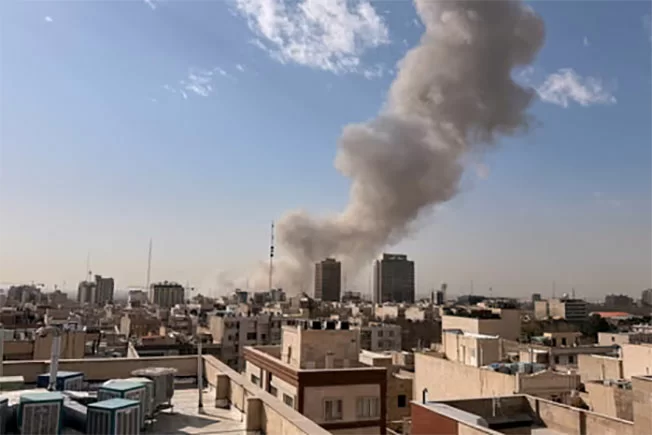
The Middle East has plunged into heightened military confrontation following coordinated pre-dawn offensive operations by United States and Israeli forces against multiple Iranian targets. This escalation marks a significant deterioration in regional stability, transforming long-simmering tensions into open warfare.
According to verified international reports, the joint military campaign struck strategic locations across Iran including the capital Tehran and major urban centers such as Isfahan, Qom, and Karaj. The operation specifically targeted Iran’s long-range missile capabilities and nuclear infrastructure, which Western intelligence agencies have repeatedly identified as threats to regional security.
US President Donald Trump characterized the mission as “major combat operations” designed to eliminate imminent security threats and prevent Tehran from acquiring nuclear weapons. The administration emphasized that these measures were necessary to protect American allies and maintain stability in the volatile region.
Iran responded with immediate countermeasures, launching missile and drone attacks against Israeli positions. The Islamic Revolutionary Guard Corps confirmed these retaliatory strikes, labeling the initial assault as “hostile criminal aggression.” Residents in northern Israel reported audible explosions and anti-aircraft activity as the Israeli Defense Forces intercepted incoming projectiles. Civil defense sirens were activated across multiple regions, prompting civilians to seek shelter.
The rapid exchange of hostilities has raised concerns among international observers about potential further escalation, with diplomatic channels working urgently to de-escalate the situation before it evolves into a broader regional conflict.