Despite projections of declining global oil prices, Guyana is positioned to spearhead unprecedented economic growth across the Caribbean region according to the World Bank’s latest Global Economic Prospects report. The South American nation’s ongoing oil boom is expected to propel subregional expansion to 5.2% in 2026, accelerating to 6.6% in 2027—figures that dramatically outpace regional averages when excluding Guyana’s extraordinary performance.
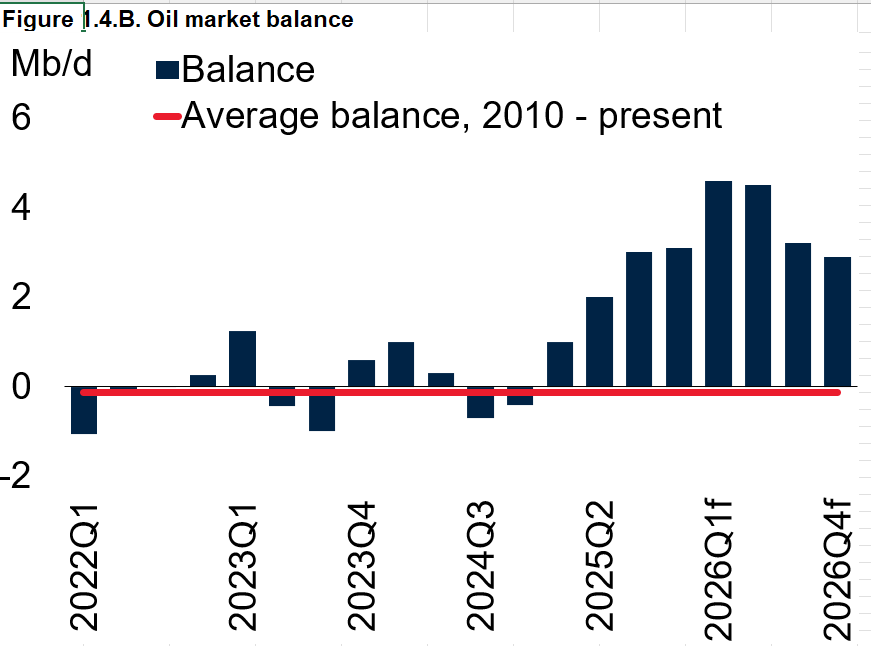
The World Bank forecasts crude prices to decline from $69 per barrel in 2025 to an average of $60 in 2026, a trend attributed to weakening global trade and economic slowdowns in major economies. This price softening coincides with anticipated supply increases from OPEC+ and United States shale production, creating what the report describes as “substantial excess supply” in global oil markets.
Remarkably, Guyana’s economy demonstrates exceptional resilience against these headwinds. The government projects overall growth at 16.2% with non-oil sector expansion reaching 10.8%, even with a conservative oil price estimate of $59 per barrel. This growth dichotomy highlights the country’s successful economic diversification alongside its hydrocarbon development.
The report further notes that industrial metal prices may find support from green energy demand, partially offsetting sluggish industrial and manufacturing activity globally. Global oil consumption is expected to grow by approximately 0.7 million barrels per day in 2026—roughly half the pre-pandemic average growth rate.
Regarding regional developments, the World Bank acknowledges it is too early to assess macroeconomic implications from recent political changes in neighboring Venezuela. Since the military ousting of President Nicolas Maduro in January, the United States has been directing Venezuela’s oil sales at market prices while implementing legal reforms to attract major energy investments. US Secretary of State Marco Rubio recently informed CARICOM leaders that Venezuela is now channeling oil revenues toward government payroll and healthcare, potentially positioning the country as a future contributor to Caribbean energy security.