In a profound historical reflection drawn from archival speeches and writings, the enduring legacy of Fidel Castro continues to illuminate Cuba’s revolutionary journey. The commemorative piece, originally published in Granma, showcases Castro’s deep reverence for pivotal dates in Cuba’s independence struggle—particularly February 24th, which marks the 1895 uprising orchestrated by national hero José Martí.
Castro’s words, spanning decades of leadership, consistently emphasized the philosophical and practical continuities between Cuba’s independence wars and his own revolutionary movement. He articulated how October 10th (1868), February 24th (1895), and July 26th (1953) formed an unbroken chain of revolutionary consciousness against colonial and neocolonial oppression.
The historical analysis reveals Castro’s particular admiration for José Martí, whom he described as “one of the most extraordinary thinkers of our hemisphere” during a 1988 speech in Ecuador. Castro highlighted Martí’s conceptualization of “a necessary and useful war” as the only path to genuine independence—a philosophy that directly informed Castro’s own revolutionary strategies.
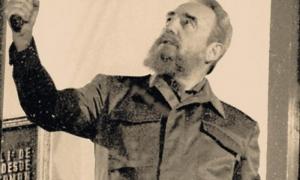
Photographic evidence accompanying the original article showed Castro wielding a replica of Antonio Maceo’s machete during the 35th anniversary of the Revolution, visually connecting the revolutionary generations. The imagery reinforces Castro’s frequent references to independence leaders like Carlos Manuel de Céspedes, Ignacio Agramonte, Antonio Maceo, and Máximo Gómez.
Castro’s speeches, particularly his 1953 “History Will Absolve Me” defense, emphasized how Cuban education systematically instilled revolutionary values: “We were taught that October 10th and February 24th are glorious days of national celebration because they mark the days when Cubans rebelled against the yoke of the infamous tyranny.”
The compilation demonstrates Castro’s consistent historical worldview: that his revolution completed the work begun by nineteenth-century independence fighters, replacing “false symbols” and “false dates” with authentic revolutionary continuity. This perspective framed contemporary political struggles as extensions of Martí’s ideological battles against opportunism and compromise.
Castro’s 1991 speech during Special Period economic hardships particularly emphasized this historical resilience: “When some said that the necessary war would never start again, Martí said, ‘Yes! The necessary war will return.’” This rhetorical strategy consistently mobilized historical precedent to address contemporary challenges throughout Castro’s leadership.