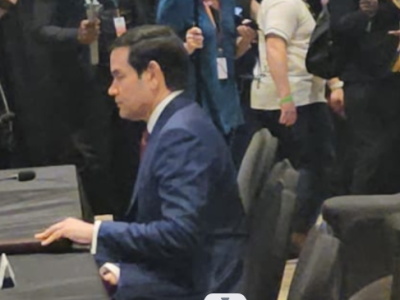
In a significant address to Caribbean Community (CARICOM) leaders during their 50th regular summit, United States Secretary of State Marco Rubio outlined Washington’s vision for a revitalized partnership with the Western Hemisphere. The closed-door meeting served as a platform for Rubio to emphasize shared security concerns and economic opportunities while addressing recent developments in Venezuela.
Rubio identified transnational criminal organizations as the region’s most pressing security threat, noting their funding and power often rival that of nation-states. He described an “interlocked challenge” fueled primarily by narcotrafficking and other illicit activities that ultimately endanger both transit countries and U.S. national security. The Secretary expressed particular alarm at the advanced weaponry these groups possess, much of which originates from the United States, and pledged intensified law enforcement cooperation to disrupt these arms flows.
Beyond security concerns, Rubio highlighted “extraordinary opportunities for economic advancement,” specifically emphasizing energy collaboration. He acknowledged the Caribbean’s energy resources and expressed America’s desire to partner in their responsible development to generate regional prosperity.
Addressing Venezuela’s political situation, Rubio defended U.S. policy despite potential regional disagreements, stating unequivocally that “Venezuela is better off today than it was 8 weeks ago.” He cited the release of political prisoners, closure of the notorious Helicoide prison, and renewed oil revenue distribution for public benefit as evidence of progress under interim authorities led by Delcy Rodríguez. While acknowledging the need for eventual legitimate democratic elections, Rubio framed current U.S. efforts as focused on preventing instability, mass migration, and spillover violence.
The Secretary positioned a potentially “prosperous, free Venezuela” as a future asset for regional energy needs and stability. He conceptualized the Caribbean Basin—including the southern United States—as an integrated zone that should attract inbound investment, with American businesses participating in the region’s economic diversification efforts.
Rubio concluded by framing U.S. and Caribbean security and prosperity as fundamentally interconnected, stating: “We view our security, our prosperity, our stability to be intricately tied to yours.” His personal presence at the summit signaled Washington’s commitment to reinvigorating relationships rather than resetting them, emphasizing longstanding bilateral and multilateral ties. Rubio pledged to make Caribbean engagement a personal priority throughout his tenure, aiming to establish a strong foundation for his successor.