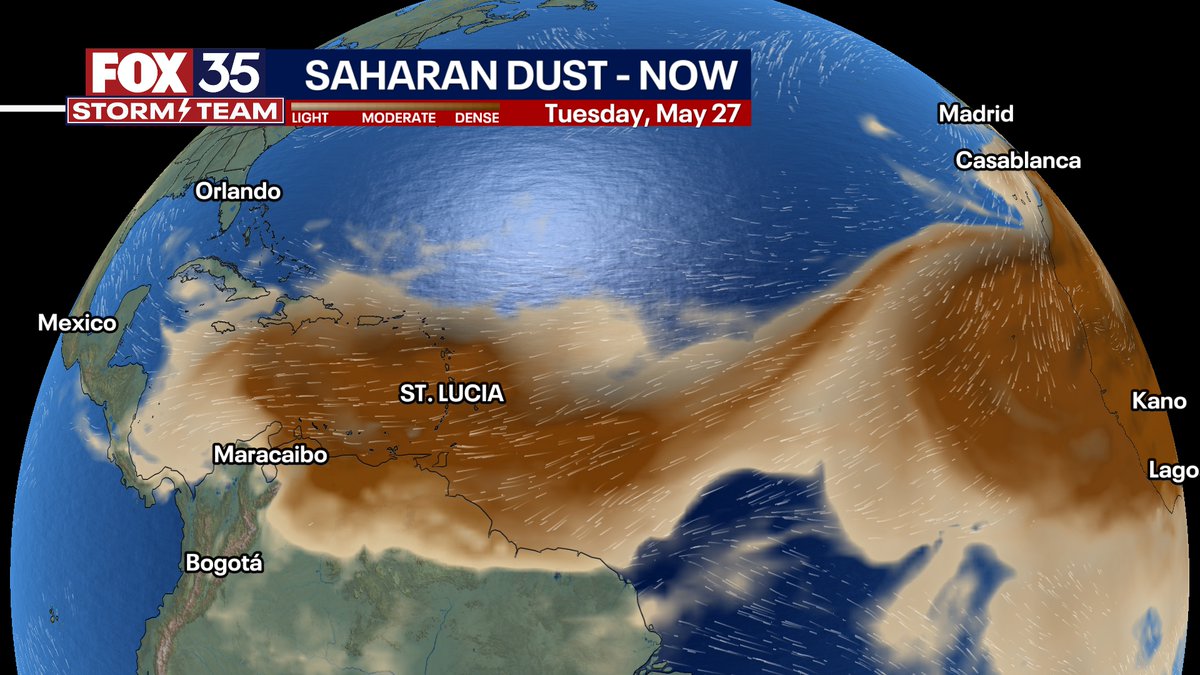
Saint Lucia braces for a significant meteorological event as a dense plume of Saharan dust traverses the Atlantic Ocean, forecast to envelop the island in the coming days. While this atmospheric phenomenon promises to create visually striking sunsets against hazy skies, it simultaneously raises substantial public health concerns that have prompted immediate governmental response.
The Ministry of Health has escalated its advisory status, urging all residents to implement comprehensive protective measures as dust concentrations approach concerning levels. Health officials specifically recommend minimizing outdoor activities, utilizing protective face masks when ventilation is unavoidable, and maintaining adequate hydration to mitigate physiological stress.
Medical authorities emphasize that the fine particulate matter carried by these dust clouds poses particular risks to respiratory health. The microscopic particles can penetrate deep into lung tissue, potentially exacerbating chronic conditions and triggering acute symptoms including persistent coughing, wheezing, respiratory distress, ocular irritation, and pharyngeal discomfort.
Vulnerable demographics—including pediatric and geriatric populations, along with individuals managing asthma or other pre-existing respiratory conditions—face elevated risk profiles. Healthcare providers encourage symptomatic individuals to seek prompt medical consultation rather than awaiting spontaneous resolution.
This annual phenomenon originates from the Sahara Desert, Earth’s largest hot desert spanning North Africa. During late spring and summer months, intensified surface winds mobilize enormous quantities of mineral dust and sand particles into atmospheric currents. These aerosols embark on transatlantic journeys spanning thousands of miles, propelled by consistent trade winds that carry them across the ocean basin to Caribbean territories.
Government agencies advise continuous monitoring of official air quality bulletins and adherence to all recommended precautions until atmospheric conditions stabilize and particulate concentrations return to acceptable levels.