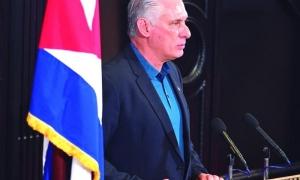
In a historic address commemorating the 50th anniversary of Cuba’s Local Bodies of People’s Power, President Miguel Díaz-Canel delivered a powerful call for democratic renewal amid significant national challenges. Speaking at the National Capitol Building on February 24, 2026—a date deeply embedded in Cuban revolutionary history—the leader framed the occasion as both a tribute to past achievements and an urgent mandate for systemic improvement.
The President’s comprehensive speech traced the historical significance of February 24th through Cuba’s independence struggles, from José Martí’s 1895 uprising to the establishment of socialist democracy. He emphasized that the People’s Power system, initiated in 1976, represented the materialization of revolutionary principles where governance truly emanates from citizen participation.
Díaz-Canel presented a candid assessment of contemporary challenges, citing economic difficulties exacerbated by the longstanding U.S. embargo, Cuba’s controversial inclusion on terrorism sponsorship lists, and internal administrative shortcomings. He acknowledged public frustrations with supply shortages, infrastructure problems, and youth disengagement while condemning external pressures as economically suffocating measures.
The address outlined four fundamental imperatives for revitalizing People’s Power: enhancing community-level responsiveness, fostering genuine participatory mechanisms rather than ceremonial attendance, embracing critical self-evaluation to combat formalism and excessive centralization, and safeguarding national hope through concrete local achievements.
President Díaz-Canel issued specific directives to delegates, urging them to prioritize street-level engagement over bureaucratic processes and transform criticisms into actionable solutions. He challenged local administrations to align governmental actions with community-identified priorities and eliminate procedural obstacles that dilute popular will.
Calling for citizen involvement beyond electoral periods, the President emphasized that participatory democracy manifests through accountability assemblies, community organizing, and collective support for vulnerable populations. He characterized Cuba’s democracy as ‘trenches democracy’—built through sacrifice and daily perseverance rather than ceremonial performance.
While celebrating the People’s Power system as a unique Cuban creation rooted in revolutionary thought and José Martí’s legacy, Díaz-Canel acknowledged it as an unfinished project requiring adaptation to demographic changes, technological evolution, and contemporary social expectations. He declared the anniversary a turning point for institutional transformation that strengthens social justice while preserving foundational principles.
The address concluded with emotional tributes to grassroots delegates and reaffirmations of revolutionary slogans, positioning People’s Power as both governance structure and living expression of popular sovereignty in the face of ongoing challenges.