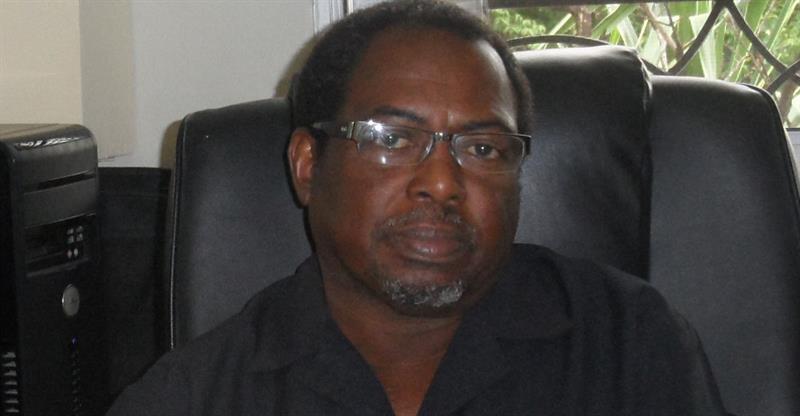
A former Caribbean diplomat has identified psychological and political barriers—not technical complexities—as the primary obstacles preventing full freedom of movement across the Caribbean Community (CARICOM). Earl Huntley, Saint Lucia’s former ambassador to the United Nations and CARICOM, asserts that deep-seated fears of mass migration and political hesitancy have stalled regional integration for decades, despite the demonstrated success of smaller-scale initiatives.
While Barbados, Belize, Dominica, and Saint Vincent and the Grenadines implemented a pioneering free movement agreement in 2025, the broader CARICOM vision remains unfulfilled. Huntley, who has observed these negotiations for years, contends that the required policy changes could be enacted immediately. “They have raised a lot of technical matters—social security benefits, contingencies for spouses—that I do not believe are necessary,” he stated. “This comes back to what I call ‘islandism’ and insularity.”
Huntley traced these apprehensions to historical precedents, including the dissolution of the West Indies Federation in the 1960s, when larger territories feared being overwhelmed by migrants. He argues that such concerns are economically irrational. “People move to places where they can find employment opportunities,” he explained. “If there are jobs available in a country and yet unemployment persists, it means the people there don’t want to do those jobs.”
He cited the successful example of the Organization of Eastern Caribbean States (OECS), which allows free movement without triggering the feared mass exodus. “Even with skilled nationals—media workers, entertainers, nurses, graduates—there has been no mass movement of people. The OECS has proven that these fears are unfounded.”
Politicians, Huntley added, are reluctant to champion free movement due to potential voter backlash, prioritizing electoral security over regional progress. Meanwhile, the economic costs of inaction are mounting. He pointed to Guyana, with its expanding oil sector and need for a larger workforce, and Saint Lucia, which faces shortages in construction and skilled labor, as examples of economies that would benefit significantly from integrated labor mobility.
Echoing this frustration, Saint Lucia’s Prime Minister Philip J. Pierre recently criticized the “slow and frustrating” pace of integration, urging citizens to demand action from their leaders to finally realize the long-promised vision of a unified Caribbean.