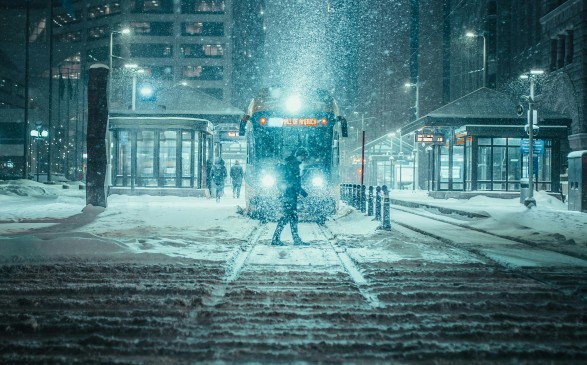
A formidable winter storm is poised to unleash its fury across the Northeastern United States, placing over 41 million residents under blizzard warnings from Maryland to Maine. Meteorological projections indicate the system will deliver catastrophic conditions, including snow accumulations potentially reaching two feet, hurricane-force wind gusts, and perilous whiteout visibility.
The most severe impacts are forecast to commence late Sunday evening, extending through Monday morning’s commute. In preparation, multiple states including Rhode Island, Pennsylvania, and Connecticut have preemptively declared states of emergency. These declarations include comprehensive commercial vehicle bans and travel restrictions effective as early as 5:00 PM Eastern Time.
New York City leadership has implemented particularly stringent measures. Mayor Zohran Mamdani announced a complete travel prohibition effective 9:00 PM Sunday until noon Monday, characterizing the approaching storm as potentially ranking among the city’s ten most severe winter events in the past 150 years. The regional transportation network is undergoing systematic shutdowns: NJ Transit will suspend bus, light rail, and Access Link services at 6:00 PM; the Long Island Rail Road anticipates full system closure by 1:00 AM Monday; and Staten Island Ferry operations will cease at 5:00 PM Sunday. Aviation disruptions continue to mount, with thousands of flights canceled nationwide—New York-area airports, particularly JFK, experiencing the highest concentration of cancellations.
Educational institutions across affected regions, including New York City and Boston, will remain closed Monday. In a notable policy shift from January’s storm response, Mayor Mamdani explicitly declared a traditional ‘snow day’ without remote learning requirements, emphasizing student safety during the storm’s most intense period.
New York’s emergency preparedness apparatus is fully activated, featuring over 2,000 snow plows and 2,600 sanitation workers deployed on extended 12-hour shifts. The city’s response strategy demonstrates heightened focus on vulnerable populations: warming centers are being expanded, overdose prevention sites will maintain overnight operations, and encampment clean-ups are temporarily suspended. This approach reflects lessons learned from January’s lethal winter event, which resulted in at least 18 fatalities, predominantly among unhoused residents. Municipal authorities have already facilitated shelter placement for 84 individuals through coordinated 311 and 911 system outreach.
With blizzard conditions expected to intensify overnight, officials throughout the Northeast uniformly advise residents to remain indoors, avoid all non-essential travel, and prepare for extended service disruptions and delays. The storm is evolving into what could become one of the most consequential winter emergencies in recent regional history.