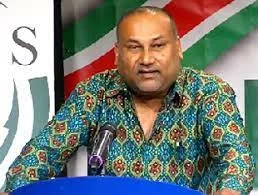
Suriname faces mounting public outrage over excessive government salaries as Swami Girdhari, Secretary of the Association of Economists in Suriname (VES), has launched scathing criticism against the nation’s compensation laws for top officials. The economist revealed that judicial and parliamentary authorities receive annual payments ranging from $35,000 to $300,000—dramatically disproportionate to the country’s $6,800 GDP per capita.
Girdhari exposed how the National Assembly passed controversial legislation in November 2024, just six months before elections, under the guise of ‘synchronization’ reforms. While promoted as eliminating double salaries and increasing transparency, the measures instead created what he termed ‘exorbitant’ compensation packages that disregarded national budget implications.
The economic expert warned that these astronomical raises are creating ripple effects throughout Suriname’s economy. Private sector businesses, particularly small and medium enterprises, cannot match the pace of public sector increases. Meanwhile, government unions are now using the new top-tier salaries as benchmarks for their negotiations—threatening to destabilize the entire national wage structure.
Girdhari proposed establishing a ‘Commission of Wise Surinamers’ comprising representatives from parliament, government, judiciary, planning bureau, state council, legal experts, and economists. This independent body would develop a new compensation framework aligned with Suriname’s economic reality, incorporating a ‘Presidential Norm’ where no public official earns more than the president—similar to the Netherlands’ ‘Balkenendenorm’ implemented after similar controversies.
The economist emphasized that while salary differences based on responsibility, education, and experience are justified, they must operate within a framework of justice and economic sustainability. Eight months after a new government took office, no corrections have been implemented despite previous criticisms from current ruling parties.