Venezuela’s interim leadership under Delcy Rodríguez is significantly reducing its longstanding security dependence on Cuba amid intense pressure from the United States, according to eleven sources familiar with the matter. This strategic shift marks a departure from the policies of deposed president Nicolás Maduro and his predecessor Hugo Chávez, both of whom relied heavily on Cuban elite troops for personal protection.
The unraveling of the Caracas-Havana security alliance follows the January 3rd U.S. military operation that resulted in Maduro’s capture and the deaths of 32 Cuban personnel who were embedded within Venezuela’s military and powerful counterintelligence unit DGCIM. This deep security cooperation, established in the late 2000s, proved essential for neutralizing domestic opposition and maintaining Chavista rule.
Multiple sources confirm that Cuban security advisors and medical personnel have been gradually departing Venezuela via air travel in recent weeks. Some Cuban intelligence officers within DGCIM have been removed from their positions, though the exact circumstances surrounding their departure remain unclear—whether by Rodríguez’s order, voluntary decision, or recall by Havana.
The Biden administration has been actively pressuring Venezuela to sever its ties with Cuba as part of a broader strategy to undermine Havana’s communist government. Since mid-December, Washington has blocked Venezuela’s oil shipments to Cuba, creating economic strangulation on the island nation. A White House official stated that the U.S. maintains ‘a very good relationship with Venezuela’s leaders’ and believes Rodríguez’s ‘self-interest aligns with promoting our key objectives.’
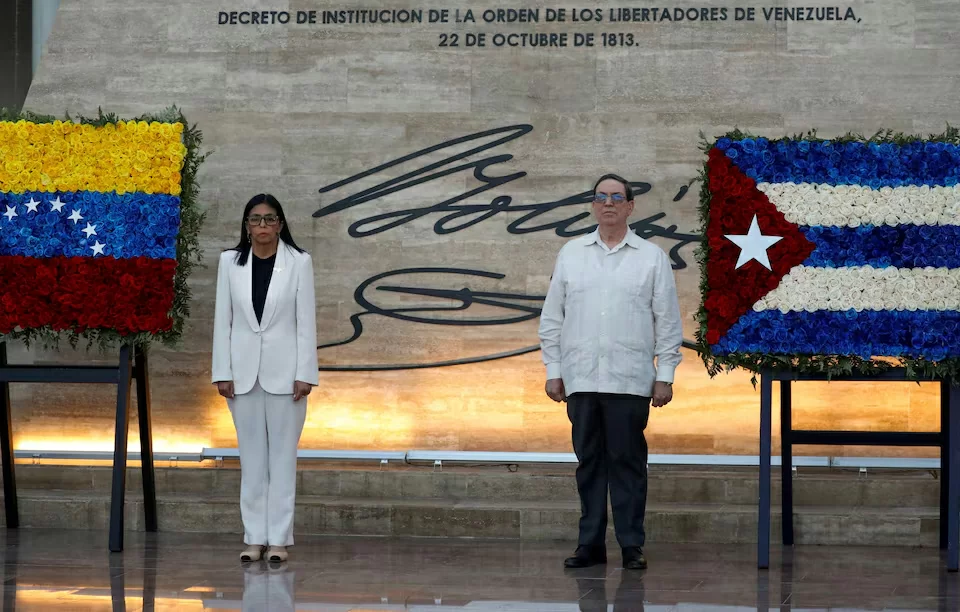
Despite these developments, both governments publicly maintain their continued alliance. Rodríguez recently participated in a floral memorial ceremony with Cuban Foreign Minister Bruno Rodríguez Padilla honoring victims of the U.S. operation, where Cuban solidarity was prominently reaffirmed. Subsequent phone conversations between Rodríguez and Cuban President Miguel Díaz-Canel further emphasized ongoing ‘unity’ between the nations.
Analysts suggest Rodríguez is navigating a delicate balance—distancing herself from Cuban influence while avoiding complete abandonment of the relationship. ‘She wants to keep the Cubans at arm’s length until the situation stabilizes and her power position becomes clear, but she doesn’t want to completely cut them off either,’ noted Frank Mora, former U.S. ambassador to the Organization of American States.
While the visible Cuban presence diminishes, some intelligence operatives likely remain to monitor Venezuela’s political evolution. The legacy of Cuban counterintelligence efforts persists through Maduro’s loyalists who retain power, suggesting that despite failing to protect Maduro, Cuba’s role in sustaining Chavista governance remains significant.