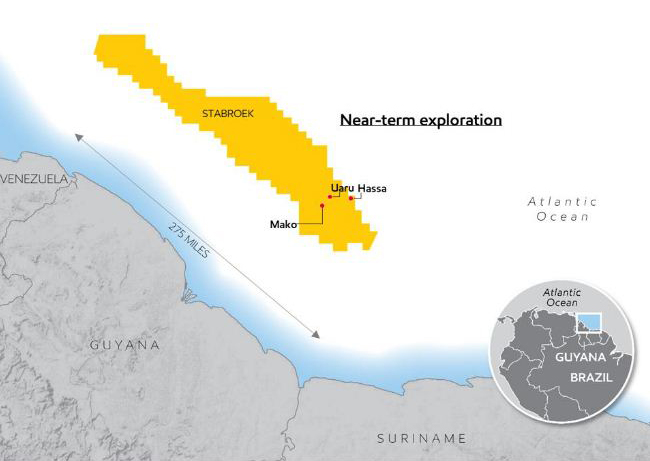
In a significant geopolitical move, Guyana has formally denied ExxonMobil permission to conduct exploratory drilling in the northwestern sector of the prolific Stabroek Block, citing ongoing border tensions with Venezuela. The decision, announced by Natural Resources Minister Vickram Bharrat on February 20, 2026, mandates that all exploration activities in the contested maritime zone must await the International Court of Justice’s ruling on the validity of the 1899 Arbitral Tribunal Award.
Minister Bharrat clarified the government’s position during the Youth Forum of the Guyana Energy Conference, stating, “Exxon sought authorization to commence drilling operations, but we explicitly instructed them to pause until the ICJ delivers its judgment. Our priority is to avoid escalating regional tensions or provoking military aggression.” The World Court is expected to issue its decisive ruling on the century-old territorial dispute by the end of 2026.
The minister simultaneously refuted claims by Guyanese attorney Christopher Ram regarding multiple force majeure declarations, confirming that ExxonMobil had invoked the clause only once in response to Venezuelan naval interventions. Other international energy companies operating in the region have similarly activated force majeure provisions following incidents where Venezuelan military vessels expelled seismic research ships from contested waters.
ExxonMobil’s leadership has characterized the pending ICJ decision as a “critical milestone” for determining the company’s future operations in the Stabroek Block, which has already yielded over 50 hydrocarbon discoveries. The northwestern portion remains under force majeure status due to the unresolved border demarcation issue between Guyana and Venezuela.
Historical precedents underscore the operational risks, with Venezuelan forces detaining the MV Teknik Perdana in 2013 and expelling the MV Ramform Tethys in 2018 from waters off Guyana’s Essequibo Region. These incidents demonstrate the persistent volatility in the disputed maritime territory that continues to impact energy development timelines.