Antigua and Barbuda has launched a multifaceted conservation project aimed at safeguarding honeybee populations from the devastating Varroa mite parasite while promoting sustainable beekeeping practices across the twin-island nation.
Initiated in 2023 with funding from the Global Environment Facility’s Small Grants Programme (GEF SGP) implemented by the United Nations Development Programme (UNDP), the project represents a collaborative effort between the Antigua Beekeepers Cooperative and the Ministry of Agriculture, Lands, Fisheries and the Blue Economy. Under the supervision of Project Coordinator Mr. Brent Georges, the initiative incorporates several strategic components including extensive planting of bee-friendly vegetation, specialized queen bee breeding programs, and comprehensive hive inspection protocols.
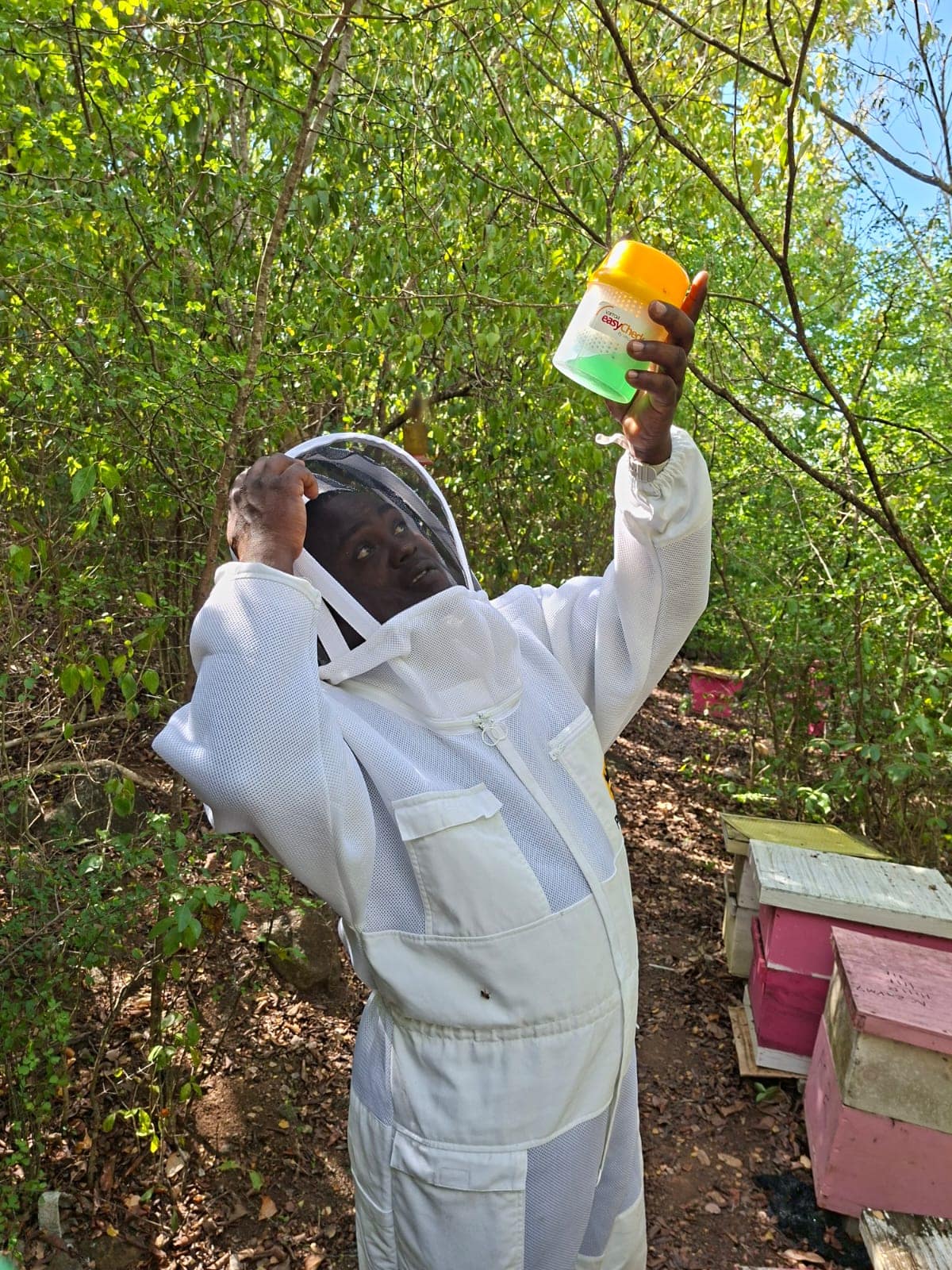
The project recently gained significant expertise with the February 6-16 visit of Mr. John Frederick, an accomplished queen bee breeder and apiary consultant from St. Lucia. Mr. Frederick conducted intensive field work with local beekeepers, sharing critical knowledge on advanced apiary management techniques and specialized methods for early detection, mitigation, and eradication of Varroa mite infestations.
The Varroa mite, recognized globally as one of the most dangerous threats to honeybee health, is a parasitic pest capable of decimating entire colonies within three to four years if left unchecked. Its presence poses existential threats to both bee populations and the broader beekeeping industry.
The engagement culminated in a highly interactive February 15th discussion session that extended well beyond its scheduled duration, demonstrating strong local interest among both established and prospective beekeepers. This enthusiastic participation underscores the project’s significance in building resilient agricultural systems and protecting vital pollinators essential for ecosystem health and food security.