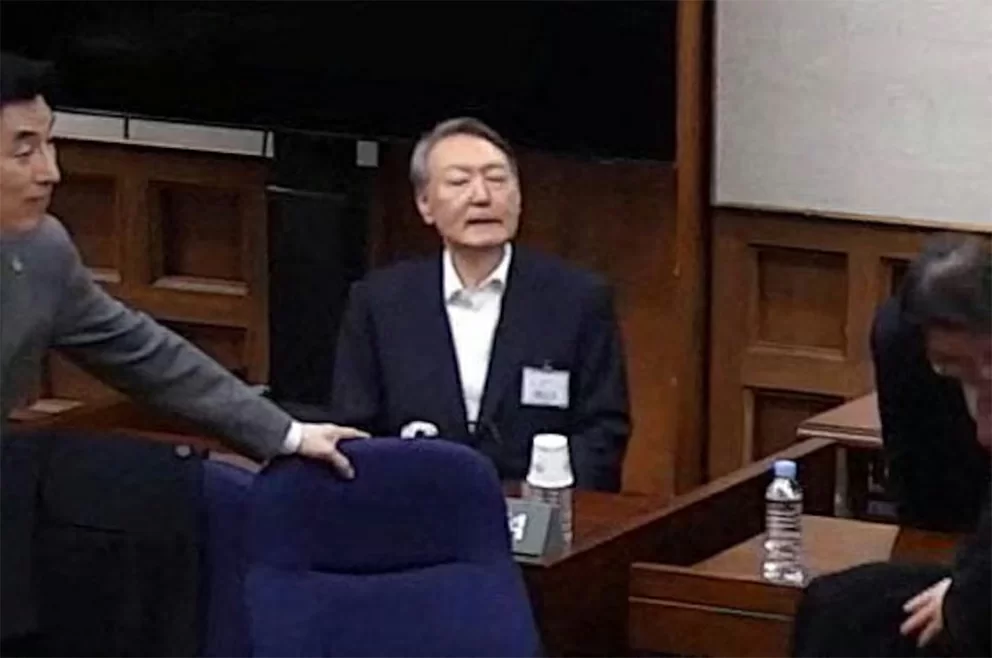
In a landmark ruling that has sent shockwaves through South Korea’s political landscape, the Seoul Central District Court has sentenced former President Yoon Suk Yeol to life imprisonment for orchestrating a rebellion during his controversial attempt to impose martial law in December 2024. The court found Yoon guilty of conspiring with then-Defense Minister Kim Yong-hyun to undermine constitutional order by deploying military forces to paralyze parliamentary functions.
Presiding Judge Jee Kui-youn, speaking for the three-judge panel, declared that “dispatching armed troops to the parliament and using equipment to make arrests constitute acts of rebellion.” The court determined that Yoon’s actions on December 3, 2024, resulted in significant societal damage through his emergency declaration, which lasted merely six hours but triggered massive public demonstrations and parliamentary rejection.
Alongside Yoon, seven other defendants received sentences, including Kim who was handed a 30-year prison term. The former president maintained composure during the verdict reading while his legal team immediately announced plans to appeal, with lead attorney Yoon Kab-keun denouncing the judgment as “completely unjust” and lacking evidentiary basis.
The case represents one of the most consequential trials in South Korea’s modern history, exposing deep political divisions that have persisted since Yoon’s ouster. Public reaction remains sharply divided, with hundreds of supporters gathering outside the courthouse demanding his release, while other citizens expressed support for even harsher punishment.
Current President Lee Jae Myung, who assumed office through interim elections following Yoon’s impeachment, praised the South Korean public for peacefully resisting the emergency measures. He suggested the populace deserved Nobel Peace Prize consideration for their democratic resilience.
This conviction adds to Yoon’s existing legal challenges, including his ongoing appeal of a separate five-year prison sentence. Legal experts anticipate the full judicial process may extend for years, though Thursday’s verdict delivers a clear condemnation of actions that severely tested democratic institutions in one of Asia’s most important economies and U.S. allies.