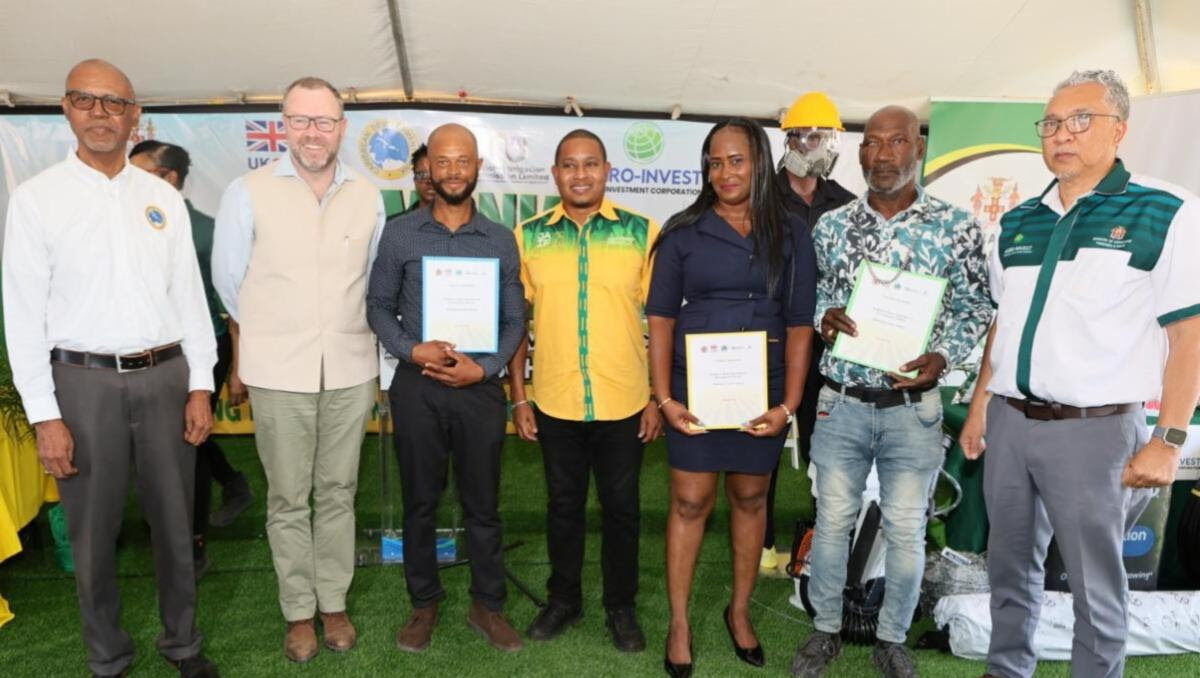
Jamaican agricultural producers are set to receive substantial financial empowerment through an innovative Matching Grant Scheme (MGS) introduced through a strategic partnership between the Jamaican government and the Caribbean Development Bank (CDB). This groundbreaking initiative, formally launched recently, represents a significant advancement in supporting the growth and modernization of Jamaica’s farming sector.
The MGS operates as a key component within the broader Southern Plains Agricultural Development Project (SPFDP), which benefits from substantial funding amounting to £16.7 million provided through the United Kingdom Caribbean Infrastructure Programme (UKCIF) and administered by CDB. The scheme specifically addresses the critical financial constraints that have historically impeded small and medium-scale farmers from expanding their agricultural operations.
Stephen Lawrence, Projects Department Advisor at CDB, emphasized the transformative potential of the program, noting that it fundamentally aims to empower agricultural producers to invest directly in their own development. Through cost-sharing arrangements for essential production and post-harvest infrastructure, the scheme effectively reduces financial barriers that have traditionally limited business expansion within the agricultural sector.
The initiative aligns perfectly with SPADP’s comprehensive objectives to enhance farming conditions across 795 hectares in the Parnassus and Amity Hall regions. Beyond physical infrastructure improvements including advanced irrigation systems, drainage solutions, farm road networks, and support facilities, the project tackles persistent challenges such as climate variability, water scarcity, escalating input expenses, and restricted market accessibility.
Jamaica’s Minister of Agriculture, Fisheries and Mining, Honourable Floyd Green, underscored the government’s unwavering commitment to developing a contemporary, resilient agricultural industry. He characterized the program as transcending mere supply distribution, instead focusing on equipping farmers with essential tools, knowledge, and confidence to function as competitive agribusiness entrepreneurs. Minister Green highlighted how such initiatives strengthen national food security, expand rural economic opportunities, and enhance Jamaica’s agricultural competitiveness in both domestic and international markets.
During project planning phases, CDB identified that infrastructure development alone would insufficiently guarantee success. The bank recognized the crucial need to support informal farmers and vulnerable households lacking secure land tenure or modernization capital. Consequently, the MGS was strategically incorporated to bridge this gap, enabling resource-constrained farmers to formalize operations and maximize benefits from newly developed infrastructure.
Vivion Scully, Chief Executive Officer of Agro-Investment Corporation (AIC), outlined the scheme’s focus on developing sustainable livelihoods and long-term agricultural growth. He explained that the support enables farmers’ transition from subsistence-based operations to structured, commercially viable production models. Through comprehensive provision of irrigation infrastructure, production inputs, specialized training, and business development guidance, the program invests directly in farmers’ capacity to increase yields, access new markets, and establish multigenerational sustainable operations.
The MGS promotes adoption of climate-resilient technologies and enhanced post-harvest management practices, advancing Jamaica’s strategic objectives of increased productivity, reduced losses, and improved market competitiveness domestically and internationally. The scheme additionally enhances market readiness by assisting producers in meeting contemporary quality standards while fostering stronger commercial buyer relationships.
Andrew Bowden, the UK’s Development Representative for Jamaica and Caribbean Regional Counsellor, highlighted how the scheme expands access to vital resources for traditionally underserved groups including women, youth, and vulnerable populations. By facilitating investments in modern irrigation, agricultural technologies, and agribusiness ventures, the program ensures farmers possess necessary tools, financing, and support mechanisms to fully utilize new Southern Plains infrastructure.
The AIC will assume management responsibility for the MGS, with a Selection Committee chaired by Mr. Scully and comprising representatives from private sector organizations and the Ministry of Agriculture, Fisheries and Mining. To ensure equitable participation, the project will develop a comprehensive Operations Manual with specific guidelines promoting involvement from vulnerable groups, supplemented by targeted communication strategies and technical assistance for investment plan development.
This initiative reflects CDB’s strategic commitment to sustainable agriculture, rural development, and climate resilience through promotion of climate-smart practices that enhance food security and economic empowerment within rural communities. It further reinforces the bank’s dedication to inclusive growth by ensuring broad-based access to development benefits and economic opportunities throughout the region.