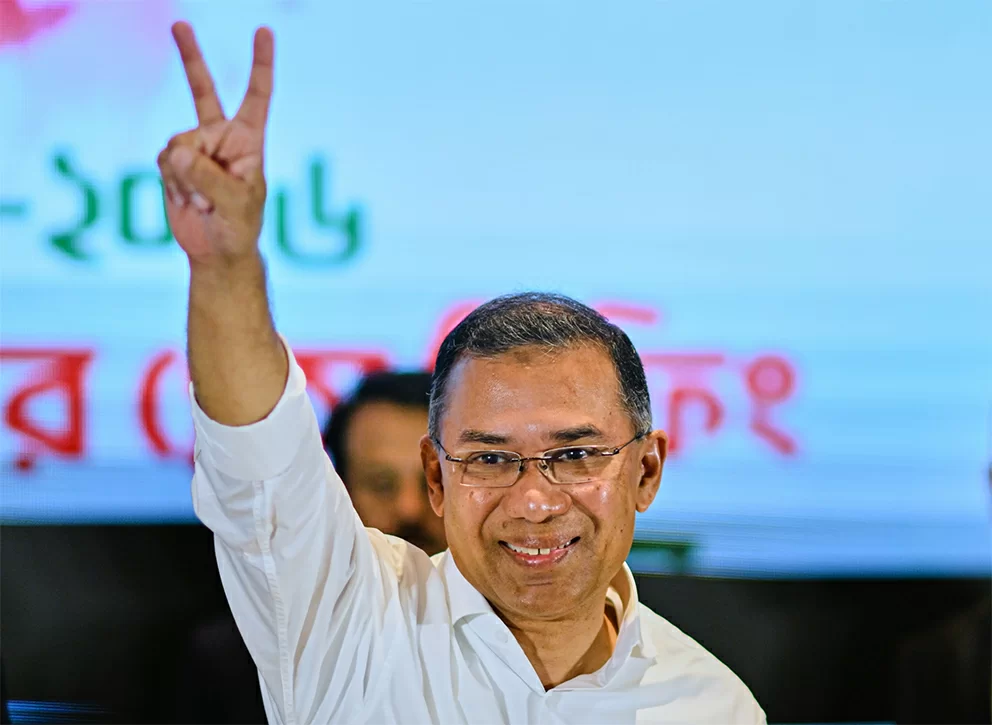
In a historic political transition, Bangladesh’s newly elected leader Tarique Rahman has committed to building a more democratic nation despite confronting significant institutional weaknesses. The Bangladesh Nationalist Party (BNP) chairman made this declaration during his first press conference in Dhaka on Saturday, following his party’s decisive victory in Thursday’s parliamentary elections.
The BNP secured a majority in the 350-seat parliament, marking a dramatic shift in the South Asian nation’s political landscape. The opposition will be formed by an eleven-party alliance led by Jamaat-e-Islami, the country’s largest Islamist party. These elections represent the first democratic exercise since the massive 2024 uprising that ousted former Prime Minister Sheikh Hasina, with an interim government headed by Nobel laureate Muhammad Yunus overseeing the largely peaceful electoral process.
Rahman, son of late former Prime Minister Khaleda Zia, identified public order restoration and economic stabilization as immediate priorities. “We are embarking on our journey amid circumstances characterized by a fragile economy inherited from the authoritarian regime, weakened constitutional and legal institutions, and deteriorating law and security situation,” Rahman stated.
The incoming leader emphasized national unity, pledging not to harm the country while warning against forces seeking to restore authoritarian rule. “To prevent malignant powers from reestablishing authoritarianism and to ensure our nation doesn’t become a subordinate state, we must remain united and respect the people’s will,” he asserted.
The BNP, one of Bangladesh’s longest-standing political parties alongside Hasina’s now-banned Awami League, had refused to participate in elections under her administration. Hasina, living in exile in India since her ouster, was convicted of crimes against humanity including responsibility for hundreds of deaths during the prolonged uprising.
The international community is closely monitoring developments, expecting the new government to pursue political reform and strengthen democratic institutions while addressing substantial economic and security challenges. The new administration is scheduled to be sworn in within days, facing the formidable task of governing this nation of over 170 million people.