A controversial compensation law passed in November 2024 has placed Suriname’s Prosecutor General among the highest-paid public officials in the nation, earning a staggering net monthly salary exceeding SRD 1 million (approximately USD 27,000). The legislation, championed by Asis Gajadien (VHP) and Geneviévre Jordan (ABOP) and enacted under President Chan Santokhi’s administration, has sparked widespread criticism for its timing and provisions.
The Judicial Position Act establishes that the Prosecutor General’s base compensation reaches 95% of the presidential salary. However, this figure represents merely the foundation for additional benefits rather than a true cap. The law’s critical feature is its definition of ‘compensation’ as an aggregate of base salary, allowances, and reimbursements.
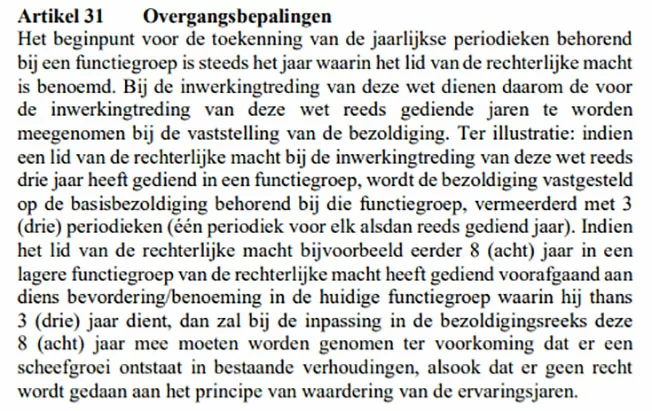
Article 31 further compounds this structure by granting annual 5% increments based not on years served in current position, but on total tenure within the judicial system. For the current Prosecutor General—with six years in role but over forty years in judicial service—this translates to exponential salary growth rather than measured experience recognition.
Beyond these provisions, tax-free allowances can reach 150-170% of base compensation, creating a system where officials technically remain under the 95% threshold while substantially exceeding it in practice. This design emerges as particularly controversial given its implementation during nationwide austerity measures that saw subsidy reductions, tax increases, and repeated government calls for public sacrifice.
The disparity has drawn sharp criticism from Assembly Member Poetini Atompai (NPS), who has demanded full governmental transparency regarding the judicial compensation structure and its burden on national finances. He rightly questions the proportionality, reasonableness, and executive accountability in this arrangement.
Critics argue that the Dutch ‘Balkenende norm’—which establishes the prime minister’s salary as the absolute maximum for public officials—offers a more transparent alternative that prevents creative legislative constructions. The current system, while legally sound, represents a failure of legislative responsibility when laws become mathematically clever but socially indigestible.
In a nation where nurses, teachers, and pensioners face genuine economic hardship, this judicial compensation model threatens to erode public trust in the justice system. The law requires immediate revision to prevent the moral derailment of Suriname’s judicial institutions and restore faith in governmental fairness.