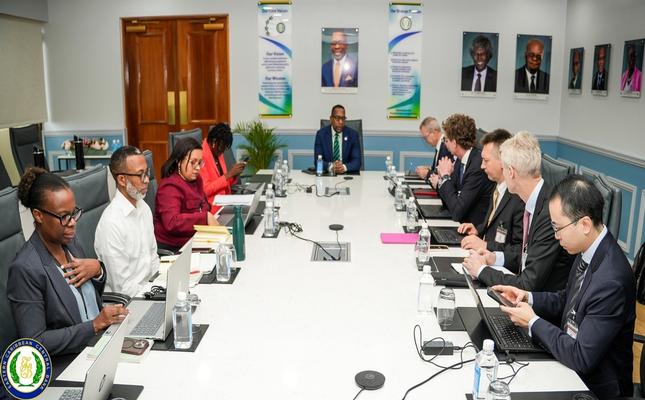
The International Monetary Fund has concluded its comprehensive assessment of the Eastern Caribbean Currency Union (ECCU), revealing a complex economic landscape marked by robust recovery momentum alongside persistent fiscal vulnerabilities. Following high-level consultations with the Eastern Caribbean Central Bank, the IMF acknowledged the currency union’s stabilizing role in this shock-prone region while issuing urgent warnings about debt sustainability challenges.
Post-pandemic economic expansion has been primarily fueled by resurgent tourism activity and substantial construction investments, driving regional growth to approximately 3% in the previous year. Inflationary pressures have notably abated, tracking global trends in energy and food prices with minimal immediate impact from recent shifts in U.S. trade policy.
However, the Fund’s analysis reveals concerning fiscal developments. Public debt reduction initiatives have stagnated across member states, attributed to recurrent external shocks. Multiple ECCU nations now face increasing uncertainty in achieving the collective target of reducing debt-to-GDP ratios to 60% by 2035. This fiscal deterioration occurs despite overall economic improvements, highlighting structural challenges in public financial management.
The financial sector maintains broad stability but exhibits underlying weaknesses. Bank balance sheets contain significant non-performing loans that exceed the ECCB’s 5% benchmark, with many impaired assets remaining unresolved for extended periods. The non-bank financial sector continues to operate under fragmented regulatory oversight, creating potential systemic vulnerabilities.
Medium-term projections indicate economic moderation to approximately 2.5% growth as tourism sectors approach capacity constraints. This slowdown reflects deeper structural issues including productivity challenges, demographic pressures, and constrained fiscal space for public investment. The IMF emphasized that decades of declining productivity and structural barriers to investment—including limited credit access, administrative bottlenecks, and workforce skill gaps—have diminished the region’s long-term growth potential.
Critical recommendations include enhanced regional policy coordination through harmonized customs procedures, a unified trade platform, and mutual recognition agreements to reduce institutional inefficiencies. The Fund urged accelerated establishment of the Eastern Caribbean Financial Standards Board to regulate non-bank institutions and create equitable operating conditions across the financial landscape.
The transition to Basel II/III frameworks continues, potentially necessitating additional capital buffers. The IMF advised targeted asset quality reviews focusing on real estate exposure, foreign investments, and risk concentration patterns to strengthen financial safeguards. These measures would complement the newly implemented deposit insurance scheme and reinforce the regional financial safety net.