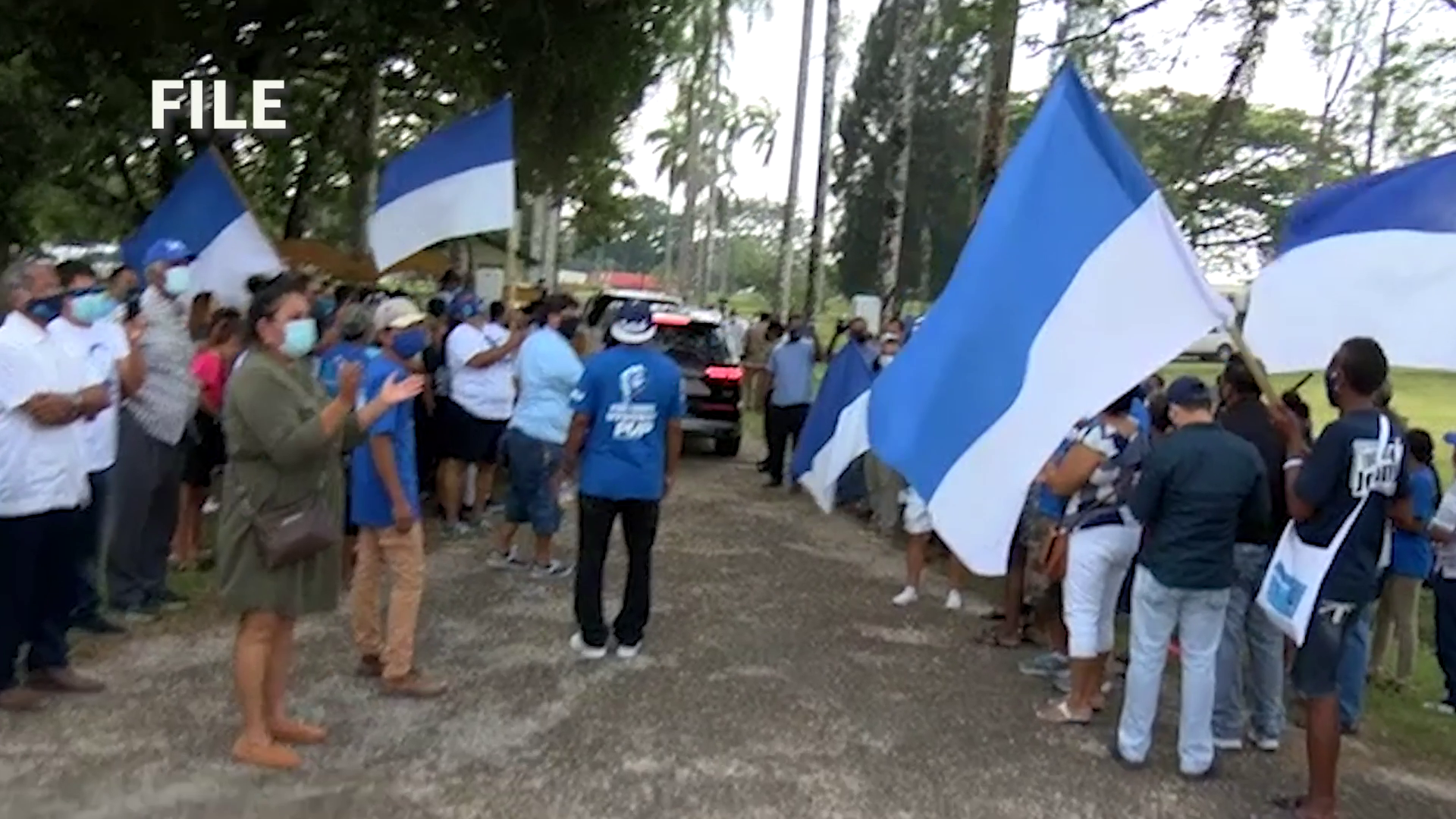
As Belize enters the early stretch of its 2026 municipal election cycle, a high-profile populist policy proposal has reignited long-simmering public anger over the lack of transparency in political campaign funding, shining a harsh light on years of unfulfilled government promises to overhaul the nation’s loose campaign finance rules.
The controversy erupted after Edward Broaster, a caretaker candidate for the United Democratic Party (UDP) in the Belize Rural Central constituency, announced a temporary $2 per-gallon gas subsidy for local voters. The move, designed to capitalize on widespread public frustration over soaring global fuel prices, quickly sparked suspicion: with no official disclosure requirements for political donations, voters have no way to trace where the funds for the handout are coming from. The incident has pulled back the curtain on a broader problem that successive Belizean administrations have failed to address – the complete lack of regulated oversight over who bankrolls political parties and candidate campaigns ahead of elections, now less than 10 months away.
The push for reform is not a new conversation. Back in 2020, when current Prime Minister John Briceño led the People’s United Party (PUP) as opposition leader, he made comprehensive campaign finance regulation a core campaign pledge. Briceño outlined four foundational pillars for the proposed legislation at the time: formal legal classification of political parties, clear standards for organizational governance, a defined structure for acceptable donations (whether private, public, or a mixed model), and binding caps on donation sizes to prevent wealthy interests from exerting outsize influence.
After the PUP won the 2020 general election and formed government, Briceño doubled down on the promise, announcing in May 2021 that the bill would be finalized and passed by the end of the year, developed in collaboration with the nation’s leading business and labor groups. The Belize Chamber of Commerce and Industry (BCCI) stepped forward to draft a full legislative proposal, which included mandatory public disclosure of all donations over a set threshold, regular reporting requirements for campaign spending, and strict penalties for non-compliance.
Marcelo Blake, BCCI’s president, reaffirmed the business community’s support for the reform in a 2023 address, noting that the draft legislation had been shared with the government and that stakeholders were ready to work with lawmakers to get the bill passed. The National Trade Union Congress of Belize (NTUCB), the nation’s largest labor federation, also backed the reform effort, warning that unregulated political financing creates a direct pipeline for corruption and quid pro quo policy-making.
Ella Waight, NTUCB’s current president, emphasized the stakes for the small Caribbean nation in a recent statement, arguing that Belize’s limited public resources are too precious to be misallocated to repay wealthy donors who bankroll winning campaigns. “We cannot allow that we have business or large entities or large people with great finances sponsoring parties when it comes to election time, and then they have to reimburse these favors,” Waight said.
Yet despite years of negotiations, stakeholder input, and public pledges, no binding campaign finance reform legislation has made it to a vote in Belize’s National Assembly, even as the next municipal election approaches rapidly. Critics point out that both of Belize’s major political parties – the ruling PUP and opposition UDP – benefit from the current opaque system, which requires almost no public disclosure of donations, imposes almost no limits on who can give, and carries zero meaningful consequences for violating the few existing weak rules. Public pressure for reform has waned in recent years, and with it the government’s sense of urgency to act.
The Broaster gas subsidy incident has dragged the unfulfilled promise back into the public eye, leaving many voters asking the same question that has lingered for half a decade: when will Belize finally deliver on the transparent, accountable campaign finance system that politicians have promised for so long?