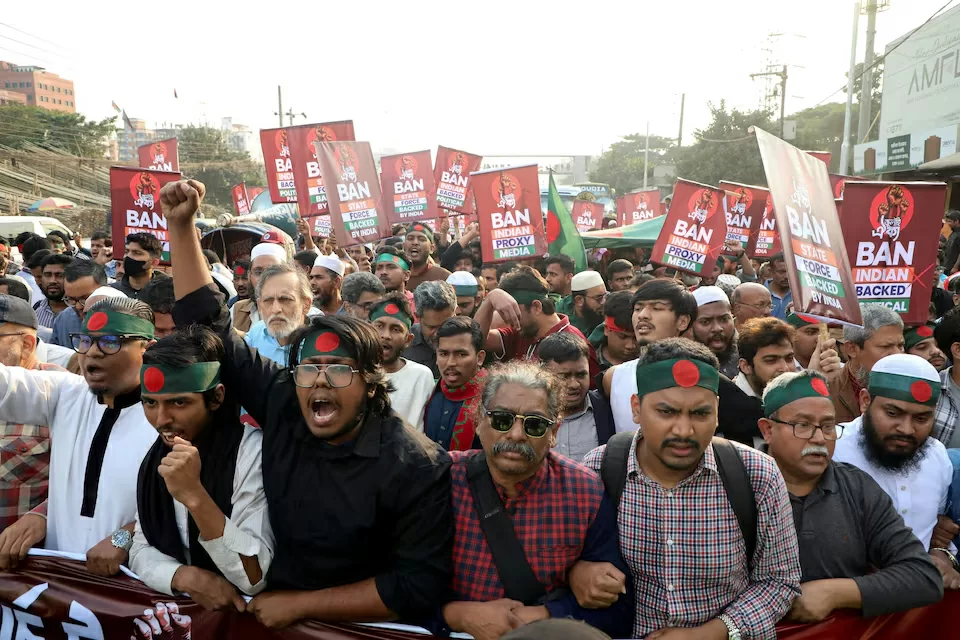
Bangladesh stands at a critical geopolitical crossroads as its February 12th elections approach, with China rapidly expanding its influence following the 2024 ouster of pro-India leader Sheikh Hasina. While analysts anticipate Beijing’s sway will further intensify after the elections, they simultaneously emphasize that India—as Bangladesh’s massive neighbor—cannot be entirely sidelined from the regional equation.
The two primary parties vying for power, the Bangladesh Nationalist Party (BNP) and Jamaat-e-Islami, historically maintained cooler relations with India compared to Hasina’s Awami League, which governed for 15 consecutive years before being banned. Hasina herself now resides in self-exile in New Delhi after being sentenced to death by a Bangladeshi court for allegedly ordering the violent suppression of a rebellion that reportedly claimed 1,400 lives—a charge she denies.
China has aggressively capitalized on the political shift, elevating investments and diplomatic engagement in Dhaka. Recent developments include signing a defense agreement to construct a drone factory near the Indian border. Chinese Ambassador Yao Wen maintains vigorous communications with Bangladeshi politicians, officials, and journalists, discussing billion-dollar infrastructure initiatives.
According to Humaiun Kobir, advisor to leading prime ministerial candidate Tarique Rahman of BNP, many Bangladeshis perceive India as complicit in Hasina’s alleged crimes. Nevertheless, Rahman stresses his commitment to friendly relations with all nations while prioritizing Bangladesh’s sovereign interests.
Bilateral tensions between Dhaka and Delhi have recently deteriorated, exemplified by a cricket controversy where a prominent Bangladeshi player was excluded from the Indian Premier League following pressure from Hindu groups. Bangladesh retaliated by banning league broadcasts and requesting relocation of their World Cup matches to Sri Lanka—a proposal rejected by international cricket authorities.
Both nations have implemented reciprocal visa restrictions, and official dialogues have become scarce since Hasina’s departure. Notably, Indian Foreign Minister S. Jaishankar did visit BNP leader Rahman in December to offer condolences following the passing of his mother, former Prime Minister Khaleda Zia.
Economically, China has been Bangladesh’s largest trading partner for over a decade, with annual trade reaching approximately $18 billion. Chinese enterprises have invested hundreds of millions since Hasina’s exit, while Indian corporate expansions—including projects by the Adani Group—have stalled.
Experts attribute China’s expanding influence to deteriorating India-Bangladesh relations and receding American engagement in the region. Beijing positions itself as a reliable economic partner avoiding entanglement in minority controversies that strain Delhi-Dhaka relations.
Despite deepening Sino-Bangladeshi cooperation, analysts caution against overlooking India’s enduring significance. “Bangladesh requires both China and India,” observes Lailufar Yasmin from the University of Dhaka. “Regardless of election outcomes, completely ignoring India would be imprudent.” Bangladesh remains geographically encircled by India and dependent on its neighbor for trade, transit routes, and security.
Although India assisted Bangladesh’s independence struggle in 1971, persistent tensions surrounding water sharing, border incidents, and Hasina’s political legacy continue to complicate relations. Emerging political forces like the National Citizen Party adopt hardened stances against India, presenting substantial challenges for future diplomatic engagement.