A controversial judicial compensation law in Suriname has triggered alarm over its substantial fiscal implications, according to administrative expert Eugène van der San. The Judicial Position Act, intended to regulate the financial status of the judiciary as mandated by the Constitution since 1975, has instead created unprecedented salary structures that threaten state finances.
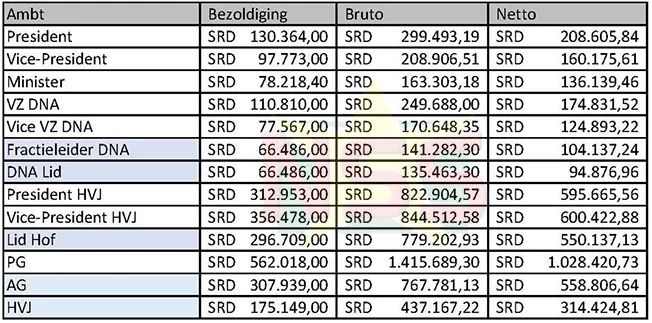
Van der San’s detailed analysis reveals that the legislation has effectively merged both sitting magistrates (judges) and standing magistrates (prosecutors) under a single compensation regime with exceptionally high income percentages. Most notably, the Prosecutor General now receives approximately SRD 1 million net monthly income – a figure that far exceeds previous compensation norms.
The critical shift occurred when the new law abandoned the traditional practice of linking judicial salaries to percentages of presidential compensation (typically 70-80%) and implemented a system allowing incomes to reach 95% of presidential salary, excluding allowances. The most concerning aspect, according to Van der San, is the allowance regime that permits supplementary payments reaching 150-170% of base salary, all tax-free.
This creates an anomalous situation where tax-free allowances exceed taxable base salaries, violating fundamental principles of sound governance. The arrangement establishes long-term budgetary obligations without consideration for the country’s economic capacity, as the law automatically applies to both judicial branches including prosecutors and the Prosecutor General.
Van der San emphasizes that the timing of implementation – after elections – obscured the financial impact during legislative consideration. He characterizes the situation as a ‘financial time bomb’ beneath the national budget and calls for immediate correction by President Jennifer Simons. His proposed solution involves repealing the current law and creating separate regulatory frameworks: one constitutional arrangement for sitting magistrates and a more modest, separate system for standing magistrates.