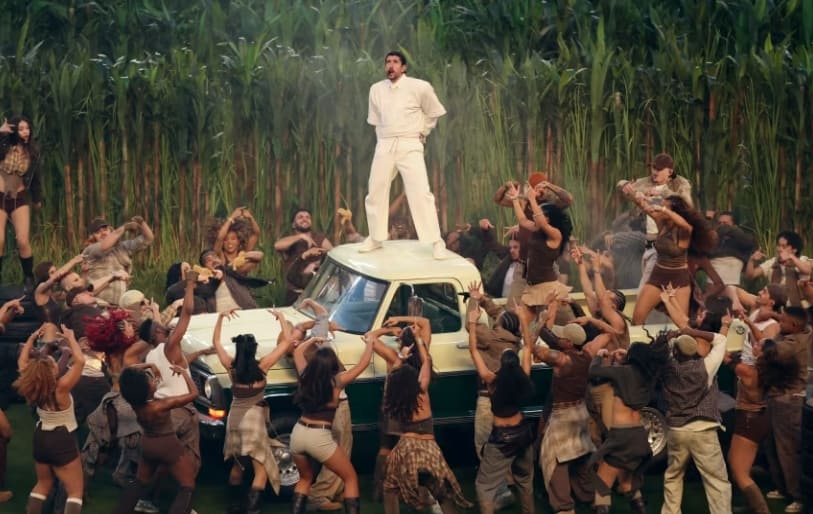
Former President Donald Trump has launched a scathing critique of Bad Bunny’s Super Bowl LVIII halftime performance, labeling it “absolutely terrible” and “an affront to the Greatness of America” in a series of posts on his Truth Social platform. The controversial remarks came as the Puerto Rican artist delivered a culturally rich performance that celebrated pan-American unity through Spanish-language hits and symbolic imagery.
Trump specifically targeted the linguistic aspects of the show, asserting that “nobody understands a word this guy is saying” and condemning the choreography as “disgusting” for young viewers. These comments emerge despite Census Bureau data indicating approximately 41.8 million Spanish speakers reside in the United States, representing nearly 13.5% of the population.
Bad Bunny, born Benito Antonio Martínez Ocasio, crafted a performance that transcended musical entertainment. The globally streamed artist incorporated powerful visual elements and theatrical nods to his Spanish-language catalog while delivering an explicit message of continental solidarity. During the show, he expanded the traditional “God bless America” phrase to encompass over twenty nations across North and South America, accompanied by the display of their respective flags alongside the US and Puerto Rican banners.
The performance contained subtle political undertones, consistent with the artist’s recent activism. Just one week prior, Bad Bunny made Grammy history by winning Album of the Year with the first Spanish-language album to claim the Recording Academy’s top prize. During his acceptance speech, he protested Immigration and Customs Enforcement policies with the declaration: “ICE out!” followed by assertions that “We are humans and we are Americans.”
Conservative opposition to Bad Bunny’s selection had been mounting since September, with organizations like Turning Point USA organizing counter-programming featuring Kid Rock and other artists aligned with Trump’s administration. The controversy highlights ongoing cultural divisions regarding representation, language, and national identity in American entertainment.