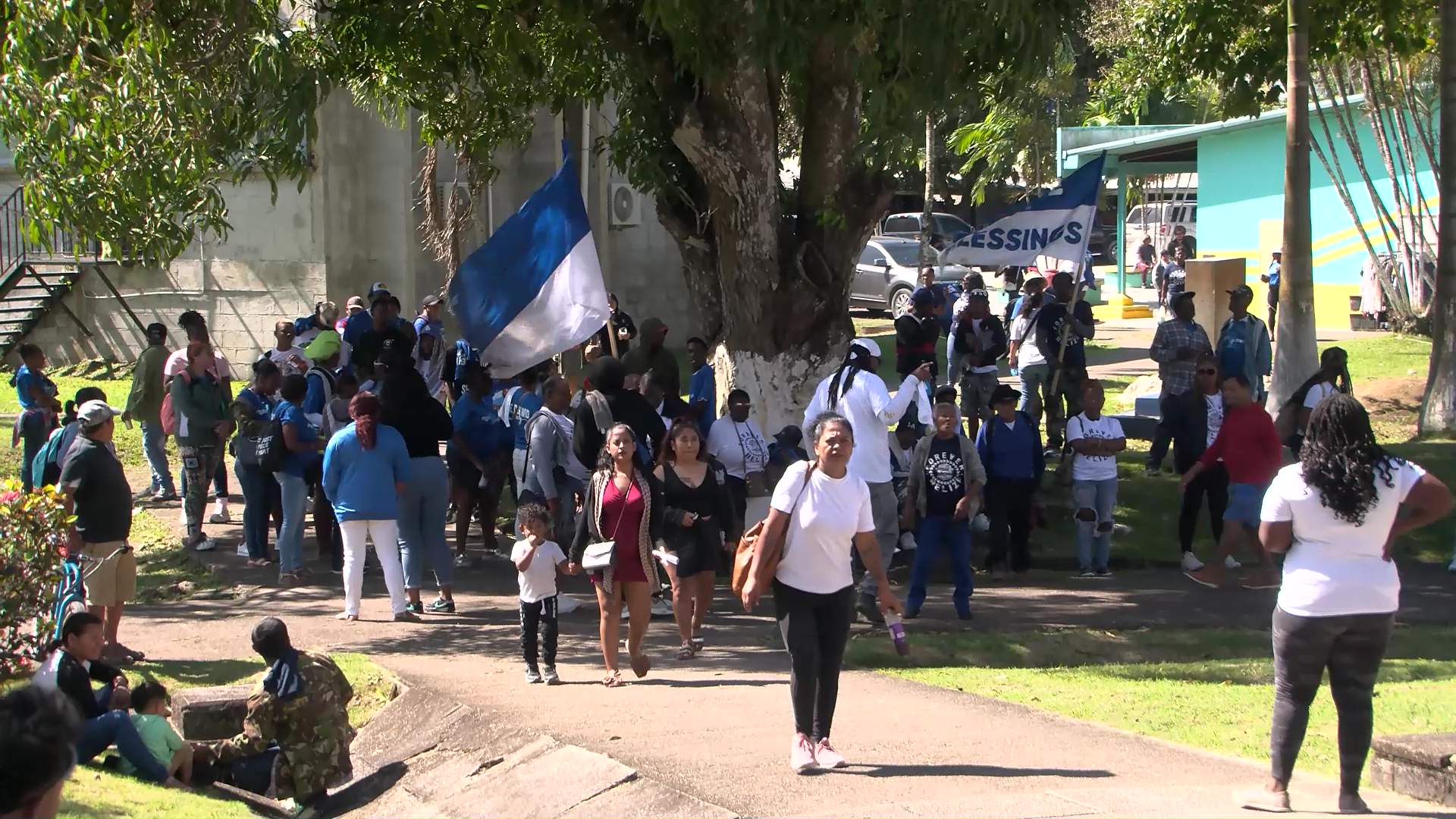
In a dramatic reversal of expectations, the political atmosphere outside Belize’s National Assembly transformed from anticipated confrontation to celebratory gathering on February 6, 2026. What was initially projected as another opposition-led demonstration instead evolved into a rally-like assembly of ruling People’s United Party (PUP) supporters.
The shift began minutes before the scheduled House sitting when the United Democratic Party (UDP) issued a late announcement declaring their complete boycott of parliamentary proceedings. The UDP characterized their absence as “round three” of an ongoing protest strategy, asserting they refused to participate in a Parliament they claim has become a “rubber stamp” for deals allegedly enriching the Briceno family while burdening Belizeans with substantial debt.
Simultaneously, Commissioner of Police Richard Rosado confirmed that the National Trade Union Congress of Belize (NTUCB) had withdrawn their protest application, while no application had been received from the opposition UDP.
The subsequent scene featured drums, dancing, and dozens of enthusiastic PUP supporters creating a festival-like environment. Party officials provided varying explanations for the gathering: Secretary General Collet Montejo described it as organic support from area representatives’ constituents, Party Chairman Henry Charles Usher emphasized support for the Occupational Health and Safety Bill, and Toledo West Area Representative Oscar Requena characterized it as public engagement with the newly renovated parliament building.
However, Pickstock Street Captain Shaheed Hauze provided the most explicit rationale, stating his division alone brought approximately 110 supporters specifically to endorse BTL’s acquisition of Speednet—the very issue the UDP protest had targeted. Despite mixed messaging, the gathering remained peaceful, with Hauze emphasizing their civilized approach and support for government decisions.
With both opposition and union protests postponed to next week, the day concluded with political theater rather than confrontation, highlighting Belize’s ongoing political divisions regarding telecommunications acquisition and governance accountability.