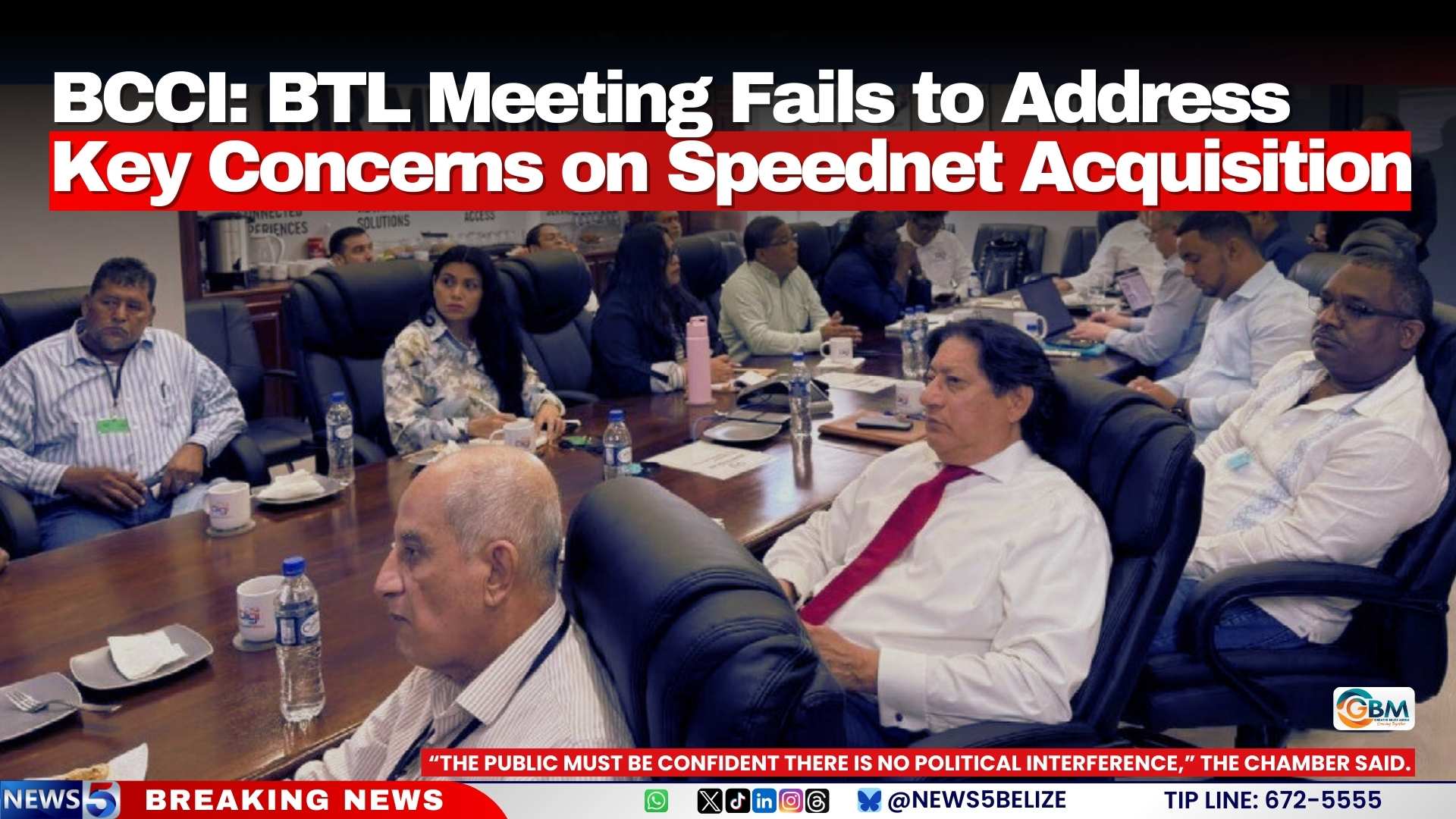
The Belize Chamber of Commerce and Industry (BCCI) has declared its fundamental concerns remain unresolved following recent discussions with Belize Telemedia Limited (BTL) regarding its proposed acquisition of telecommunications competitor Speednet/SMART.
This development creates a significant divergence in business community perspectives, as the Belize Business Bureau (BBB) separately endorsed the merger earlier this week, controversially asserting that ‘competition destroys profits.’
In a detailed statement released Thursday, the BCCI acknowledged the meeting with BTL was constructive but insufficient. The chamber raised multiple substantive objections centered on regulatory compliance, financial transparency, and consumer protection.
Key concerns include whether the acquisition violates Section 42(4) of Belize’s Telecommunications Act, the methodology used to determine the purchase price, and potential conflicts of interest in the valuation process. The chamber specifically called for independent scrutiny of the proposed return on investment calculations by a firm with no Belizean affiliations.
The BCCI highlighted particular anxiety regarding the exposure of the Social Security Board (SSB) as a shareholder and uncertainties about rate-setting mechanisms under a potential monopoly. The statement emphasized that reduced competition would likely diminish tailored solutions, flexible contracts, and competitive pricing while increasing vulnerability to service outages and system failures.
Citing the need for rigorous oversight, the chamber insisted the Public Utilities Commission must enforce robust consumer protection rules. The BCCI formally demanded full transaction disclosure, independent valuation, public consultation proceedings, and updated consumer protection legislation before any acquisition proceeds.
The chamber’s statement concluded with a pointed emphasis on political neutrality, stating ‘The public must be confident there is no political interference’ in the regulatory process.