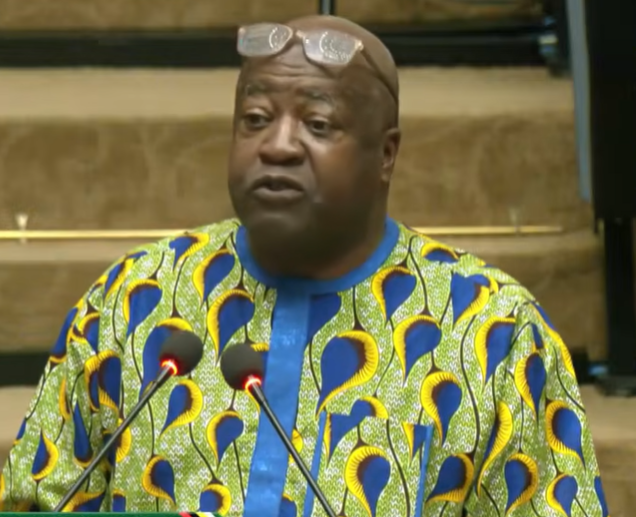
In a significant parliamentary address, Dr. David Hinds, Co-leader of the Working People’s Alliance (WPA) and APNU parliamentarian, has called for a major reallocation of Guyana’s educational budget. Speaking before the National Assembly on Wednesday, Dr. Hinds proposed diverting substantial portions of the GY$5.8 billion allocated to the Guyana Online Academy of Learning (GOAL) program to instead bolster funding for the University of Guyana (UG).
The veteran politician and former Political Science Professor at Arizona State University expressed grave concerns about UG’s financial stability, noting that the institution’s GY$14.5 billion allocation falls significantly short of its requested GY$21 billion budget. This underfunding occurs despite a dramatic enrollment increase following the government’s reintroduction of free education policies last year.
Dr. Hinds drew historical parallels, recalling that UG was initially established in 1963 by PPP founder Dr. Cheddi Jagan with modest beginnings at Queen’s College. “Is Jagan’s party not running the risk of turning the University of Guyana into another night school?” he questioned, highlighting the irony that current policies might undermine the very institution his political opponents’ founder created.
The criticism of GOAL’s management follows similar concerns raised days earlier by WIN’s Shadow Education Minister Dr. Gordon Barker, who characterized the program as suffering from “poor planning, weak oversight, and unacceptable uncertainty.” Dr. Barker noted the absence of clear reporting on completion rates, accreditation standards, and employment outcomes for GOAL participants.
Education Minister Sonia Parag responded to earlier criticisms by highlighting what she characterized as hypocrisy, noting that Dr. Barker himself had pursued studies through the GOAL program he now criticizes.
The budgetary debate also extended to public sector compensation. APNU parliamentarian Ganesh Mahipaul highlighted the disparity between government ministers’ substantial salary increases and the modest wages of ordinary public servants. With minimum public sector wages at GY$102,000 and private sector minimums at GY$60,000, Mahipaul questioned whether the GY$1.558 trillion budget adequately addressed workforce dignity.
Public Service Minister Zulfikar Ally defended the administration’s record, noting a 46% increase in public servants’ minimum wage since the PPP returned to office in 2020. He emphasized that the public sector wage bill had nearly doubled from GY$127 billion in 2020 to GY$252 billion by the end of 2025, reflecting consistent annual increases.