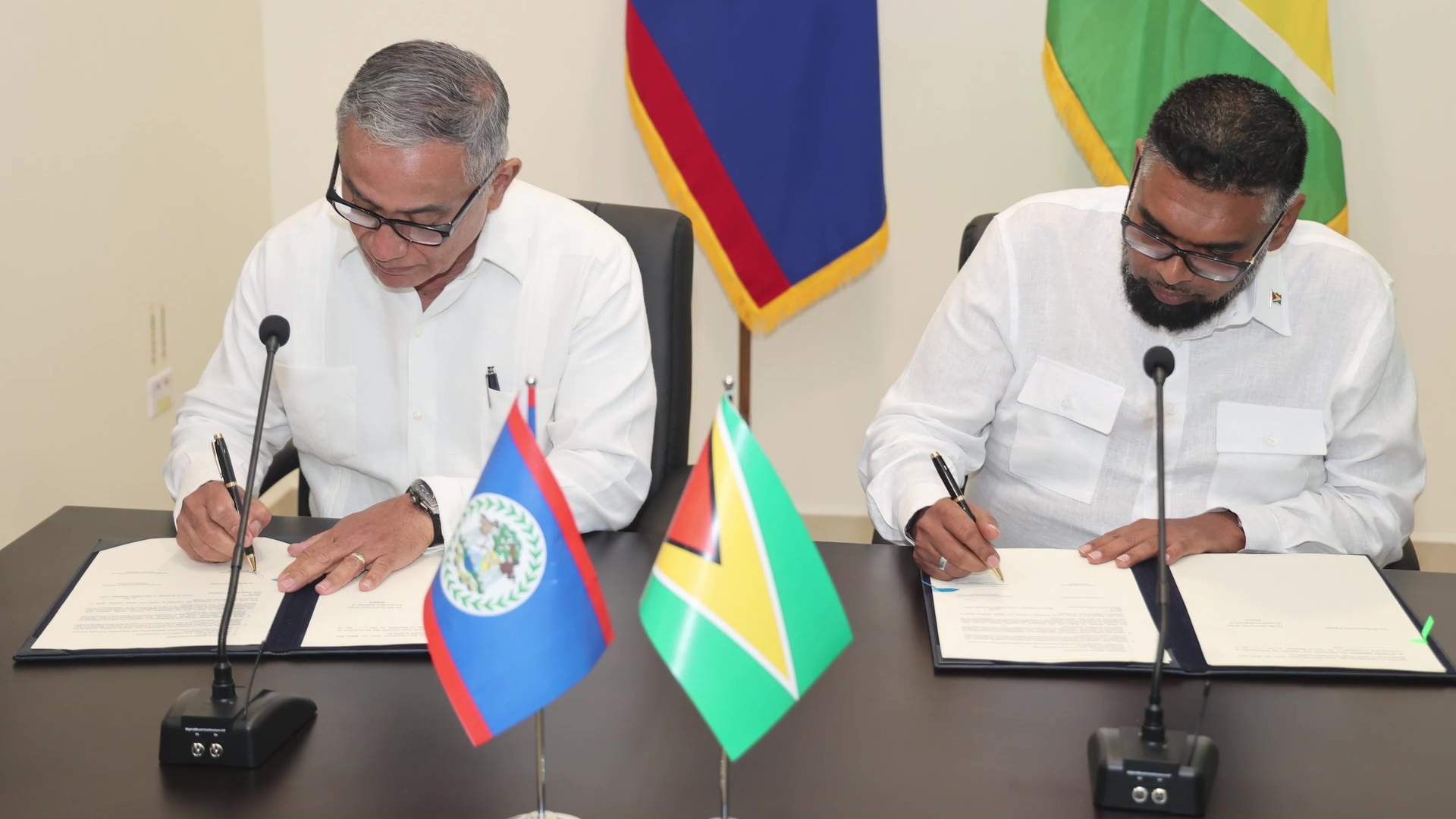
In a significant diplomatic development for the Caribbean region, Guyana’s President Dr. Irfaan Ali concluded a pivotal three-day state visit to Belize, culminating in the signing of multiple bilateral agreements designed to strengthen ties between the two nations. The visit, which commenced on Sunday, featured a historic address to Belize’s National Assembly where President Ali outlined a shared vision for enhanced cooperation.
The cornerstone of this strengthened partnership emerged through five memorandums of understanding covering critical sectors including agricultural development, educational exchange, tourism promotion, national security coordination, and digital transformation. Prime Minister John Briceño emphasized the strategic importance of these agreements, noting they provide “a solid basis for deeper collaborations in areas of mutual benefit.”
Economic relations received particular attention, with Belize having exported $4 million worth of goods to Guyana in 2024 alone. Both leaders signed a joint statement reaffirming their commitment to expanding trade and investment opportunities, recognizing the potential for significant growth in bilateral commerce.
The security dimension of the partnership advanced through a defense agreement signed by Belize’s Defense Minister Florencio Marín and Guyana’s Foreign Minister, establishing frameworks for military capacity building and coordinated response to emerging regional threats.
Notably, the digital transformation agreement incorporates artificial intelligence cooperation aimed at improving government efficiency and public service delivery. Both nations also committed to joint leadership in regional food security initiatives, with President Ali advocating for the removal of “artificial barriers of trade that affects this region.”
The diplomatic engagement attracted cross-party support, with Opposition Leader Tracy Panton acknowledging the “inspiring” nature of the agreements and highlighting shared democratic values between the nations. The visit, attended by diplomats and private-sector representatives, establishes a foundation for long-term economic and social benefits that extend beyond immediate bilateral relations to broader Caribbean integration.