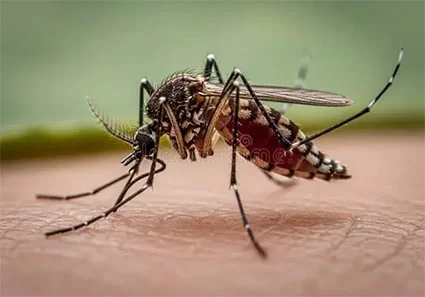
Suriname’s Ministry of Health has activated emergency alerts as chikungunya infections demonstrate a concerning upward trajectory across the nation. Public Works waste management services have intensified efforts to collect bulk refuse from public areas, marking the opening of another seasonal offensive against a persistent adversary: the Aedes aegypti mosquito.
This insect, whose scientific nomenclature translates to ‘unpleasant from Egypt,’ represents far more than a mere nuisance. While serving as a food source for certain bird and amphibian species, its primary human impact involves transmitting devastating viral diseases including yellow fever, dengue, chikungunya, and Zika. Historical eradication attempts—notably Brazil’s 1958 declaration of being Aedes-free through DDT deployment—ultimately failed due to insecticide resistance, environmental concerns, and cross-border reinfestation.
The female Aedes aegypti requires protein-rich blood meals for egg production, leading to aggressive daytime biting behavior within remarkably limited flight ranges of 50-800 meters. This localized movement pattern means neighborhood sanitation directly determines community vulnerability. Even minor water accumulation in bottle caps or blocked gutters can become breeding grounds, making collective participation in elimination efforts essential.
Dengue (characterized by high fever and ocular pain), chikungunya (causing severe arthralgia), and Zika (associated with birth defects) share overlapping symptomatology including fever, chills, and profound lethargy. Definitive diagnosis requires blood testing, though treatment primarily involves supportive care with hydration, rest, and analgesics. Hospitalization becomes necessary when warning signs like hemorrhage, persistent vomiting, or neurological complications emerge.
Ultimately, Aedes-borne diseases thrive through environmental neglect. Structural waste accumulation, stagnant water reservoirs, and inadequate public maintenance create ideal vector habitats. Both governmental action and individual responsibility—particularly in maintaining clean residential perimeters—prove critical in breaking disease transmission cycles. The biting truth remains: mosquito proliferation directly reflects communal sanitation standards.