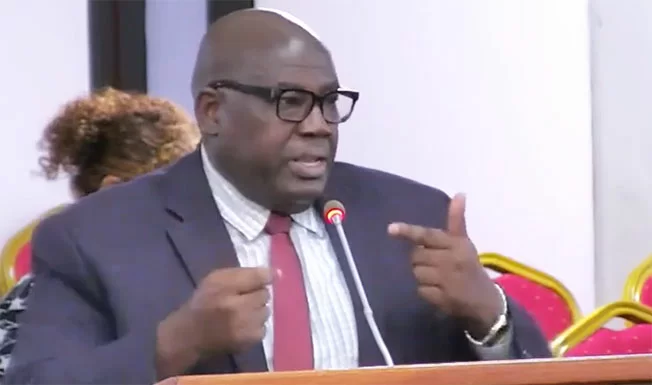
A severe aviation crisis at Suriname’s Johan Adolf Pengel International Airport has triggered intense parliamentary debate, exposing critical vulnerabilities in the nation’s air traffic control system. Transport Minister Raymond Landveld acknowledged profound staffing shortages during Tuesday’s heated National Assembly session, revealing that the country operates with merely 26 air traffic controllers against a required minimum of 80 for normal operations.
The emergency parliamentary discussion was prompted by recent flight diversions and significant delays occurring after multiple air traffic controllers reported sick simultaneously. While the SATCA union denies organizing coordinated action, Minister Landveld conceded the practical effect remains identical to a strike operation. “When personnel abandon control towers forcing aircraft diversions, this severely damages Suriname’s international reputation,” Landveld stated during the contentious hearing.
Opposition leaders delivered scathing critiques of the government’s handling of the situation. NPS faction leader Jerrel Pawiroredjo and NDP representatives Rabin Parmessar and Raymond Sapoen emphasized the complete absence of travel certainty for passengers. “Individuals depart their homes uncertain whether they can land or return safely. This constitutes a grave security emergency,” multiple assembly members declared. The parliamentarians further highlighted the contradiction between tourism’s designation as an economic priority and the current aviation breakdown.
Minister Landveld outlined a comprehensive modernization package including newly signed contracts for advanced radar equipment and an Instrument Landing System scheduled to become operational within six to seven months. Training programs for new controllers have commenced, with additional cohorts beginning in February. The minister acknowledged that developing fully qualified controllers requires approximately four years of training, though assistant controllers can achieve partial operational capacity within nine months. Student allowances have been doubled from SRD 5,000 to SRD 10,000, though Landveld admitted this remains insufficient.
The National Assembly has demanded immediate resolution, scheduling a follow-up meeting for Thursday where the government must present concrete short-term solutions and safety guarantees. The unified parliamentary message emphasized that while negotiation understanding exists, the collapse of vital national infrastructure remains completely unacceptable. The government is expected to provide detailed contingency plans and emergency measures during the upcoming session.