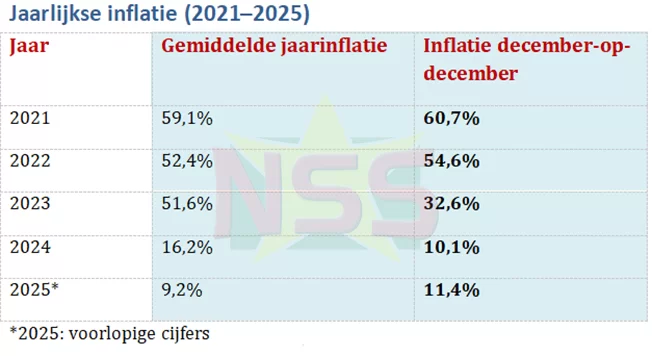
Suriname’s annual inflation rate reached 11.4% in December 2025, according to preliminary data released by the General Bureau of Statistics Foundation (ABS). The latest figures indicate a modest 0.4% month-over-month increase in consumer prices compared to November 2025. While representing a significant improvement from the peak inflation years of 2021-2023, the current price levels continue to exert substantial pressure on household purchasing power across the South American nation.
Critical analysis of the inflation components reveals that food, housing utilities, and healthcare services remain the primary drivers of price escalation. Healthcare costs have demonstrated particularly dramatic annual increases, with additional significant contributions from restaurant dining expenses and alcoholic beverages alongside tobacco products. Conversely, certain product categories including fruits and vegetables experienced mild price reductions during December, though these isolated decreases do not indicate structural relief as other essential goods maintain elevated pricing.
The ABS emphasized that reported inflation figures represent weighted averages that may not accurately reflect individual consumer experiences. December 2025 witnessed extraordinary price volatility across specific products, ranging from -49% to +600% monthly variations. Even more strikingly, the period from January 2024 through December 2025 recorded price fluctuations spanning -67% to +600%, explaining why many households perceive living costs as substantially higher than official statistics suggest, particularly regarding daily necessities and fixed expenses.
Economists note that while inflation has clearly decelerated compared to previous years, this moderation does not automatically translate to purchasing power recovery. Prices continue their upward trajectory—albeit at a reduced pace—while wages and incomes for large population segments fail to keep pace with the persistent cost increases, creating ongoing economic strain for Surinamese families.