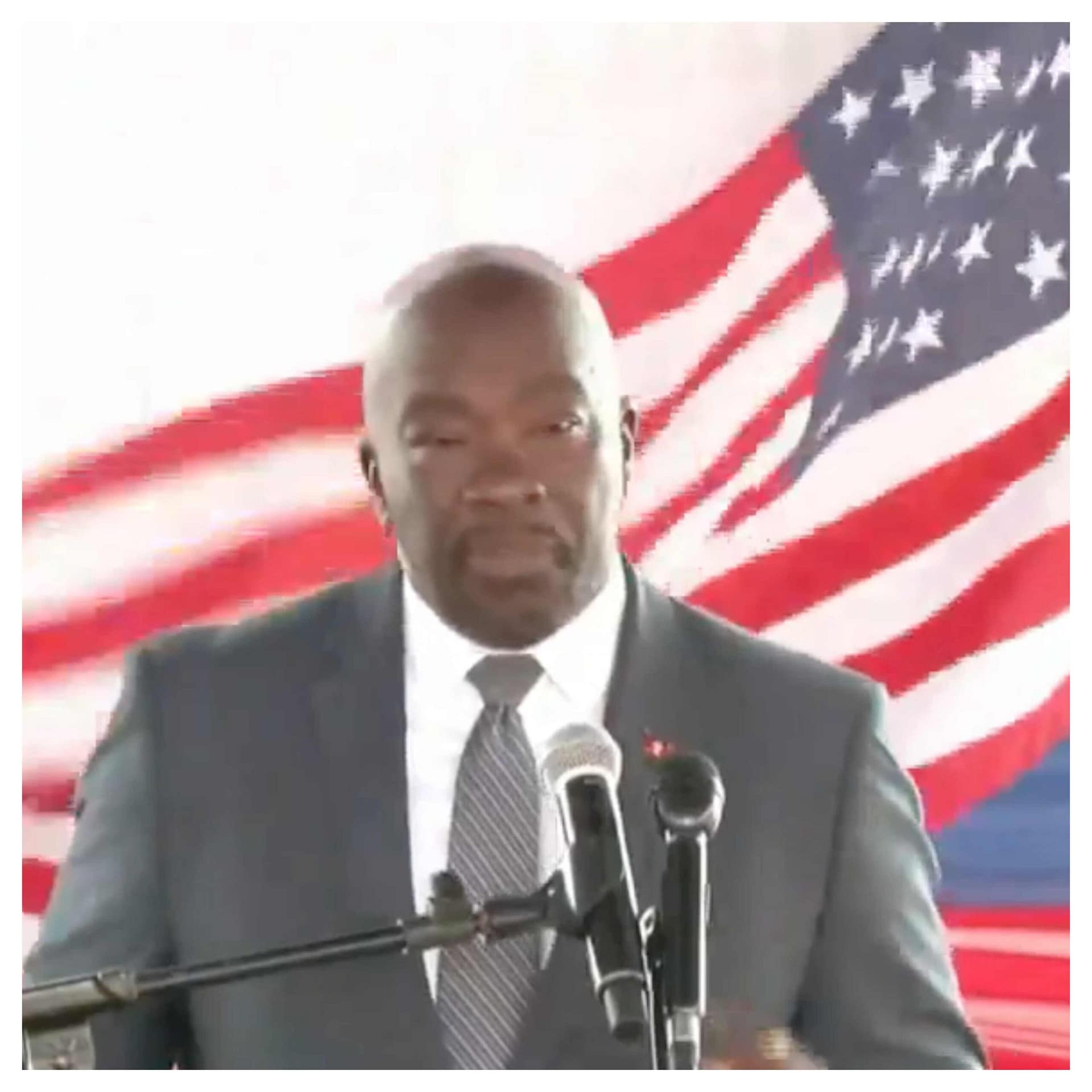
A contentious political dispute has erupted in Antigua and Barbuda’s government over infrastructure management, pitting Utilities Minister Melford Nicholas against Barbuda MP Trevor Walker regarding proposed structural changes to road restoration operations.
Minister Nicholas launched a vehement counterattack against Walker’s criticism of his initiative to establish a dedicated road repair crew within the Antigua Public Utilities Authority (APUA). Nicholas pointedly reminded the public that Walker himself served as Minister of Public Works for approximately five years during the previous administration, highlighting that the chronic issue of poorly restored roads following utility work persisted throughout his tenure.
‘The chronic problem of APUA and PWD has existed since then,’ Nicholas asserted in his response, questioning how Walker could criticize the proposed action plan without acknowledging his own record on addressing the long-standing issue.
Walker, speaking on Observer Radio’s ‘Big Issues’ program, had expressed serious reservations about creating what he characterized as a duplicate ‘public works’-type unit within APUA. The opposition MP argued this organizational shift could create redundancy while potentially weakening the Ministry of Works’ core responsibilities. He emphasized concerns regarding standardization, supervisory control, and accountability mechanisms, noting the public lacked clarity on whether the proposed crew would operate under Public Works supervision or function autonomously within APUA.
Rather than transferring capabilities to the utilities authority, Walker proposed establishing a dedicated road restoration team within the Ministry of Works itself. This specialized unit would maintain technical oversight from Public Works while coordinating closely with APUA to ensure prompt response to utility-related excavations.
Minister Nicholas framed his proposal as a practical solution to break the cycle where newly rehabilitated roads undergo emergency utility repairs only to be left with substandard restoration. An integrated APUA team, he contended, would better synchronize utility upgrades with road projects, minimizing damage to finished road surfaces. The initiative would require significant investment in equipment and staffing.
The debate occurs against a backdrop of mounting public frustration over repeatedly excavated roads that remain poorly patched for extended periods. Both officials acknowledge the legitimate grievances of motorists and residents who face uneven road surfaces and prolonged restoration delays following essential utility repairs.