Cuban Ambassador to Colombia Carlos de Cespedes has leveled serious accusations against the United States, characterizing Washington’s interception of Venezuelan oil shipments to Cuba as “international piracy.” This dramatic escalation follows a controversial U.S. military operation that resulted in the abduction of Venezuelan President Nicolás Maduro.
In an exclusive interview with Al Jazeera on Saturday, de Cespedes described the American restrictions as a “maritime siege” that severely impacts Cuba’s economy. He asserted that Cuba currently faces the most intense threats from the United States since the 1959 revolution, with comprehensive sanctions and military pressure creating unprecedented economic strain.
The oil supply from Venezuela, which had served as Cuba’s primary energy source for years, has virtually ceased following Maduro’s capture. President Donald Trump declared earlier this month that “zero” Venezuelan oil would reach Cuba and threatened additional military actions if necessary.
American forces have been intercepting and confiscating Venezuelan oil tankers throughout the Caribbean region—actions that critics equate with modern-day piracy. Trump has stated that Cuba stands “ready to collapse” due to the loss of these critical energy revenues.
Although Cuba continues importing limited oil supplies from alternative sources including Mexico, the termination of Venezuelan shipments threatens to push the island’s already fragile economy to the brink. Washington is reportedly considering a complete energy blockade that could potentially trigger a humanitarian crisis.
Relations between Washington and Havana have remained tense since Fidel Castro’s communist revolution in 1959. The current Trump administration, influenced by Cuban-American officials including Senator Marco Rubio, has adopted an increasingly hardline stance toward Cuba.
The United States continues to implement its hemispheric foreign policy through a strategy reminiscent of the 19th-century Monroe Doctrine, which treats the American continent as an exclusive sphere of influence. This historical precedent established that European interference in the Americas would be viewed as an attack on the United States itself.
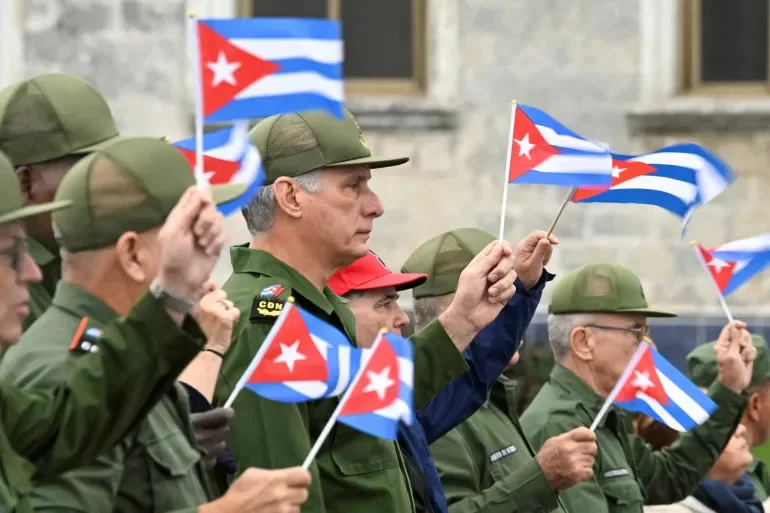
Despite these mounting pressures, Ambassador de Cespedes emphasized Cuba’s resilience: “It will not subjugate us or break our determination, even if not another drop of oil enters our country.” He invoked Fidel Castro’s anti-imperialist legacy and affirmed that Cuba remains unafraid of threats or terror, concluding with a powerful statement: “Those who seek peace must be prepared to defend it.”