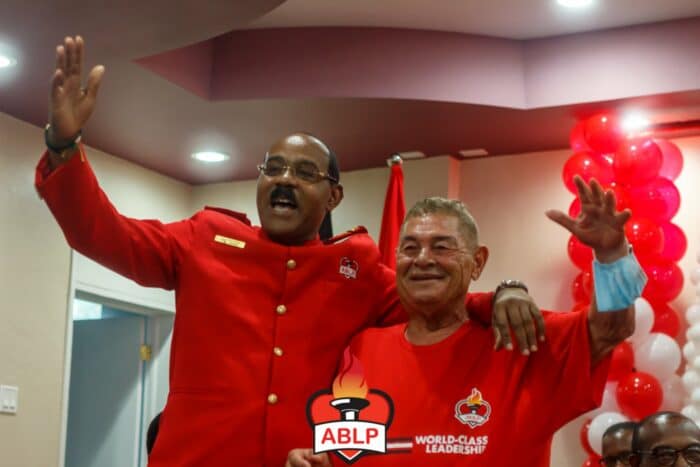
The Parliament of Antigua and Barbuda will convene a special ceremonial session on February 18th to commemorate an extraordinary political milestone—Sir Robin Yearwood’s fifty years of continuous parliamentary service. Prime Minister Gaston Browne made the formal announcement during his weekly appearance on Pointe FM’s ‘Browne and Browne’ program, revealing that the event will serve as the centerpiece of nationwide celebrations orchestrated by a specially appointed Cabinet committee.
Prime Minister Browne expressed profound admiration for Sir Robin’s unprecedented achievement, noting, ‘This remarkable longevity represents an exceptional record not merely within our nation, but across the entire Caribbean region and potentially throughout the Commonwealth nations. To maintain both health and public trust across five decades demonstrates extraordinary dedication.’
The Cabinet has established a select committee comprising Prime Minister Browne, Attorney General Sir Steadroy Benjamin, and Health Minister Sir Molwyn Joseph to coordinate multifaceted commemorative activities. These will honor Sir Yearwood’s uninterrupted representation of the St. Philip’s North constituency since first taking office in 1974.
Sir Robin Yearwood’s distinguished career includes ministerial leadership across critical portfolios including Agriculture, Public Works, and Finance. Despite approaching his octogenarian years, he maintains active political engagement and robust health. The government is collaborating with Sir Robin’s family members to design appropriate tributes that properly reflect his enduring legacy.
Beyond the parliamentary ceremony, celebrations will include constituency-level events and separate commemorations organized by the Antigua and Barbuda Labour Party. Prime Minister Browne emphasized that such prolonged service necessitates both exceptional personal resilience and sustained voter confidence, stating, ‘The public’s enduring trust remains the fundamental requirement for such longevity. In this regard, Sir Robin represents a truly special case in Caribbean political history.’